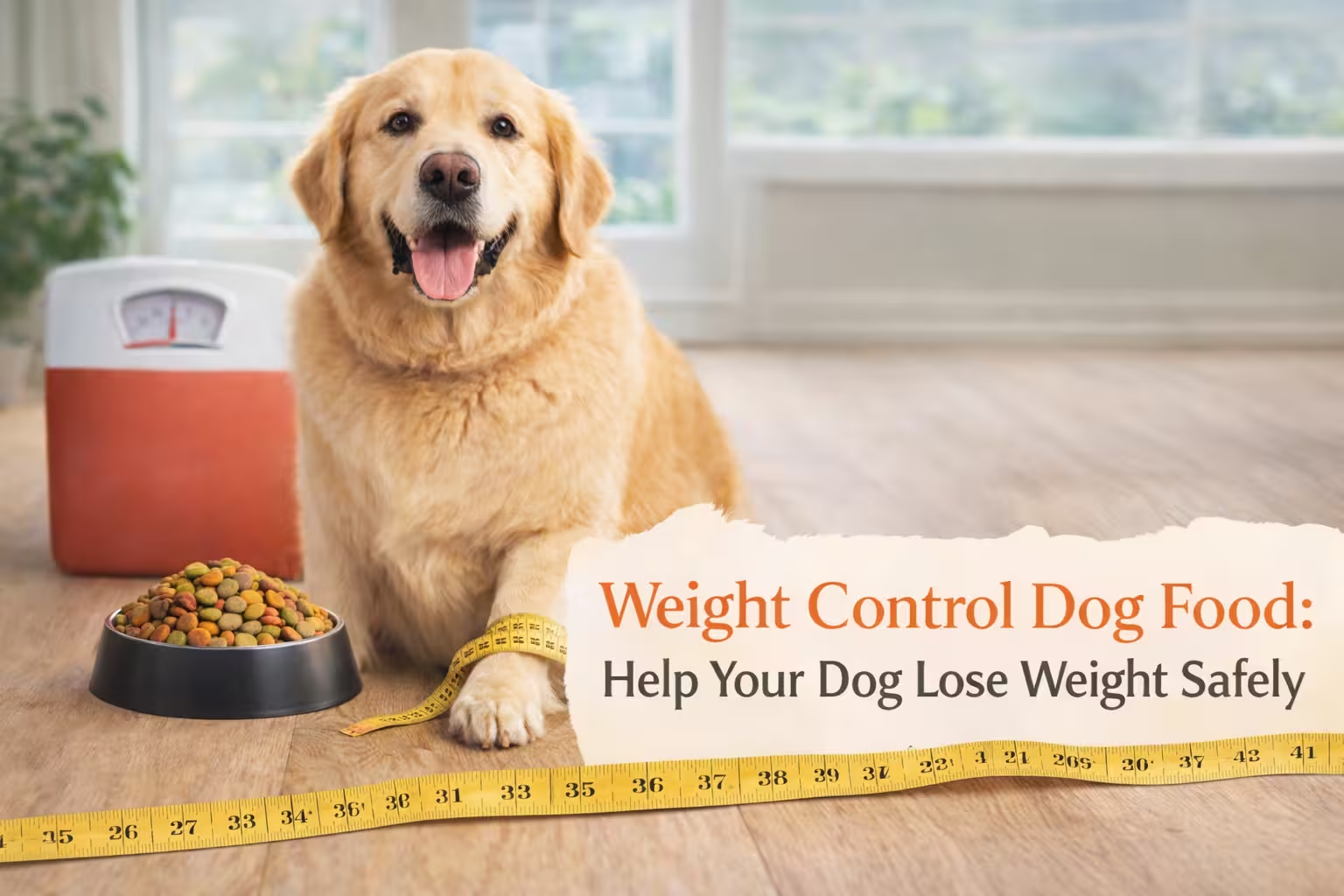

If your dog is carrying extra weight, you're far from alone. Studies show that over 56% of dogs in the United States are classified as overweight or obese — and that number continues to climb. The good news? Switching to a properly formulated weight control dog food is one of the most effective steps you can take to help your furry friend shed those dangerous extra pounds and add years to their life.
In this comprehensive guide, we'll walk you through everything you need to know about weight control dog food — from understanding what makes it different, to choosing the right formula, to feeding it correctly for real results.
Why Dog Obesity Is a Serious Health Crisis
Before diving into food recommendations, it's important to understand why carrying excess weight is so dangerous for dogs. Canine obesity isn't just a cosmetic issue — it's a chronic disease that dramatically impacts your dog's quality of life and longevity.
Overweight dogs face significantly higher risks of:
- Joint disease and arthritis — excess weight places chronic strain on joints, accelerating cartilage breakdown
- Type 2 diabetes — caused by insulin resistance often linked to excess body fat
- Heart disease and high blood pressure — the cardiovascular system must work harder to support extra weight
- Respiratory problems — fat deposits around the chest restrict lung expansion
- Pancreatitis — a painful and potentially life-threatening inflammation
- Increased cancer risk — obesity is associated with higher rates of bladder, breast, and other cancers
- Reduced lifespan — studies show obese dogs live up to 2.5 years less than dogs at a healthy weight
According to the Association for Pet Obesity Prevention, many pet owners don't even realize their dog is overweight. Learning to assess your dog's body condition is the critical first step — and choosing the right weight control dog food is the second.
How to Tell If Your Dog Needs Weight Control Food
Before switching your dog's diet, you need to accurately assess whether they're truly overweight. Veterinarians use a Body Condition Score (BCS) system — typically on a 9-point scale — to evaluate a dog's weight status.
The At-Home Rib Test
You can perform a quick assessment at home using the rib test:
- Place your hands on your dog's ribcage — thumbs on the spine, fingers spread across the ribs
- Apply light pressure — you should be able to feel each rib with a thin covering of muscle
- Compare the feeling:
- Ideal weight — ribs feel like the knuckles on the back of your flat hand
- Overweight — ribs are hard to find; feels like pressing the palm of your hand
- Underweight — ribs are sharp and prominent, like a closed fist
Visual Indicators
- From above: Your dog should have a visible waist (hourglass shape) behind the ribs
- From the side: The belly should tuck upward from the ribcage to the hind legs
- Overweight signs: No visible waist, straight or sagging belly line, waddling gait
If your dog scores above a 5 on the 9-point BCS scale, it's time to talk to your veterinarian and consider switching to a weight control dog food.
Pro tip: Use our free dog calorie calculator to find out exactly how many calories your dog needs daily based on their current weight, target weight, and activity level.
What Makes Weight Control Dog Food Different?
Not all dog food is created equal — and weight control dog food is specifically engineered to help dogs lose fat while maintaining lean muscle mass. Here's what sets it apart from standard formulas:
Lower Calorie Density
Weight management formulas contain fewer calories per cup than regular maintenance diets. This means your dog can eat a satisfying portion size without consuming excess energy. While standard dog food might contain 350–450 kcal per cup, weight control formulas typically range from 250–330 kcal per cup.
Higher Protein Content
Protein is essential for preserving lean muscle during weight loss. Quality weight control dog food formulas contain 25–35% protein (on a dry matter basis) to ensure your dog burns fat — not muscle.
Increased Fiber
Fiber is the secret weapon in weight management foods. It adds bulk to meals, slows digestion, and helps your dog feel full longer. This reduces begging behavior and between-meal hunger. Look for formulas with 8–15% crude fiber.
Reduced Fat
Since fat is the most calorie-dense macronutrient (9 calories per gram vs. 4 for protein and carbs), weight control formulas keep fat levels lower — typically 7–12% compared to 14–18% in standard foods.
Fortified Nutrients
Because dogs eat fewer calories on a weight management diet, quality formulas are fortified with essential vitamins and minerals to prevent nutritional deficiencies.
Key Ingredients to Look For
When shopping for weight control dog food, check the ingredient list and guaranteed analysis for these important components:
| Ingredient / Nutrient | Why It Matters | What to Look For |
|---|---|---|
| L-Carnitine | Helps transport fatty acids into cells for energy, promotes fat burning and lean muscle retention | Listed in ingredients or supplements |
| High-Quality Protein | Chicken, turkey, salmon, or lamb as the first ingredient preserves muscle | Named animal protein as #1 ingredient |
| Functional Fiber | Beet pulp, psyllium, or cellulose for satiety and digestive health | 8%+ crude fiber on guaranteed analysis |
| Omega-3 Fatty Acids | Fish oil or flaxseed for joint health, skin, and anti-inflammatory benefits | EPA/DHA listed in supplements |
| Glucosamine & Chondroitin | Joint support — critical for overweight dogs with extra joint stress | Listed in supplements section |
| Probiotics | Supports gut health and nutrient absorption during diet transition | Named probiotic strains listed |
Ingredients to Avoid
- Corn syrup or added sugars — empty calories with no nutritional value
- Artificial colors and flavors — unnecessary and potentially harmful
- Excessive fillers — low-quality grains used primarily to reduce cost
- By-product meals as the primary protein — lower digestibility and nutritional value
Top Veterinary-Recommended Weight Control Dog Food Brands
Based on clinical research and veterinary recommendations, here are the most trusted brands for canine weight management:
Hill's Science Diet Perfect Weight
Hill's is one of the most research-backed pet food brands in the world. Their Perfect Weight formula uses a proprietary blend of ingredients clinically proven to help dogs achieve a healthy weight within 10 weeks. It features real chicken as the first ingredient and contains L-carnitine for fat metabolism support.
Royal Canin Weight Care
Royal Canin offers breed-specific and size-specific weight management formulas, which is particularly helpful because calorie needs vary significantly between a Chihuahua and a Great Dane. Their formulas are known for high palatability — important for picky eaters transitioning to a lower-calorie diet.
Purina Pro Plan Weight Management
Purina Pro Plan provides balanced weight management formulas with high-quality protein from real chicken or turkey, combined with prebiotic fiber for digestive health. Their formulas are available for small, medium, and large breeds.
Hill's Prescription Diet Metabolic
For dogs that need to lose a significant amount of weight, your veterinarian may recommend a prescription diet like Hill's Metabolic. These clinical formulas are strictly designed for safe, effective weight loss under veterinary supervision and often achieve faster results than over-the-counter options.
Important: Always consult your veterinarian before switching to a weight control dog food, especially if your dog has underlying health conditions. Some conditions — like hypothyroidism or Cushing's disease — can cause weight gain and need medical treatment alongside dietary changes.
Weight Control Dog Food vs. Regular Dog Food: Calorie Comparison
Understanding the calorie difference is crucial. Here's how popular weight control formulas compare to their standard counterparts:
| Brand & Formula | Calories per Cup | Protein % | Fat % | Fiber % |
|---|---|---|---|---|
| Standard Adult Maintenance (Avg.) | 380–420 kcal | 22–26% | 14–18% | 3–5% |
| Hill's Science Diet Perfect Weight | ~291 kcal | 28% | 9% | 12% |
| Royal Canin Medium Weight Care | ~272 kcal | 28% | 10% | 11% |
| Purina Pro Plan Weight Management | ~312 kcal | 26% | 8.5% | 10% |
| Hill's Prescription Diet Metabolic | ~265 kcal | 29% | 10.8% | 14% |
As you can see, weight control formulas deliver 25–35% fewer calories per cup while providing more protein and significantly more fiber than standard diets.
Use our pet calorie calculator to determine your dog's ideal daily calorie intake, then use the kcal/cup information from your chosen food to calculate the right portion size.
How to Transition Your Dog to Weight Control Food
Switching foods abruptly can cause digestive upset. Follow this gradual transition schedule over 7–10 days:
- Days 1–2: 75% old food + 25% new weight control food
- Days 3–4: 50% old food + 50% new weight control food
- Days 5–6: 25% old food + 75% new weight control food
- Days 7–10: 100% new weight control food
Monitor your dog's stool quality throughout the transition. Loose stools are normal in the first few days but should firm up as their digestive system adjusts.
Feeding Guidelines for Weight Loss Success
Switching to weight control dog food is only half the battle. How you feed it matters just as much as what you feed.
Measure Every Meal with a Scale
Ditch the measuring cup — studies show that scooping kibble with a cup can result in up to a 50% error in portion size. Use a digital kitchen scale to weigh your dog's food in grams for precise calorie control.
Follow the 10% Treat Rule
Treats should make up no more than 10% of your dog's daily calorie intake. If your dog needs 800 calories per day, that means a maximum of 80 calories from treats. Consider using healthy, low-calorie alternatives:
- Baby carrots (about 4 kcal each)
- Green beans (about 7 kcal per 10 beans)
- Apple slices (without seeds — about 5 kcal per slice)
- Plain cooked pumpkin (about 8 kcal per tablespoon)
Feed on a Schedule
Free-feeding (leaving food out all day) makes it nearly impossible to control calorie intake. Instead, divide your dog's daily food allowance into 2–3 scheduled meals at consistent times.
Track Progress Weekly
Weigh your dog weekly at the same time of day. A safe rate of weight loss is 1–2% of body weight per week. If your dog isn't losing weight after 2–3 weeks, reduce portions by 10% and reassess.
Not sure how many calories to cut? Use our dog calorie calculator to get a science-backed recommendation based on your dog's breed, weight, age, and activity level.
Common Mistakes to Avoid
Even with the best intentions, pet owners often make these errors when trying to help their dogs lose weight:
- Simply feeding less of their regular food — this can cause nutritional deficiencies because standard foods aren't fortified for reduced portions
- Ignoring treats and table scraps — a single tablespoon of peanut butter adds 95 calories; a small piece of cheese adds 50+ calories
- Not adjusting for activity level — a senior couch potato needs far fewer calories than an active working dog
- Expecting overnight results — safe weight loss takes time; rapid loss can cause liver problems (hepatic lipidosis)
- Skipping veterinary check-ups — regular weigh-ins and body condition assessments are essential for tracking progress safely
Understanding AAFCO Labels on Weight Control Dog Food
When evaluating weight control dog food options, understanding the label is crucial. Here's what AAFCO (Association of American Feed Control Officials) terms actually mean:
- "Light" or "Lite" — must meet strict calorie limits set by AAFCO based on moisture content
- "Low Calorie" — similar regulatory requirements as "light"
- "Weight Control" or "Healthy Weight" — no official AAFCO definition — manufacturers can use these terms more loosely
- "Less" or "Reduced" — indicates fewer calories compared to a specific reference product (e.g., "30% less fat than our Original Recipe")
- "Complete and Balanced for Adult Maintenance" — meets AAFCO nutrient profiles for adult dogs
Pro Tip: Always look for the AAFCO nutritional adequacy statement confirming the food is "complete and balanced" for adult maintenance. This ensures your dog gets all essential nutrients even on a calorie-restricted diet.
Special Considerations for Senior Dogs
Senior dogs (typically 7+ years for large breeds, 10+ for small breeds) face unique weight management challenges:
- Slower metabolism — calorie needs decrease with age
- Reduced activity — less movement means fewer calories burned
- Muscle loss (sarcopenia) — makes high-protein weight control formulas especially important
- Joint issues — excess weight worsens arthritis pain, creating a vicious cycle of inactivity and weight gain
For senior dogs, look for low calorie dog food for senior dogs that combines weight management with joint support ingredients like glucosamine, chondroitin, and omega-3 fatty acids. Senior-specific formulas also typically contain antioxidants to support cognitive health and immune function.
Frequently Asked Questions
How long does it take for a dog to lose weight on weight control food?
Most dogs on a proper weight management program lose 1–2% of their body weight per week. For a 50-pound dog needing to lose 10 pounds, expect the process to take approximately 10–20 weeks. Consistency with portion control and exercise is key.
Can I mix weight control dog food with regular food?
While you can mix formulas, it defeats the purpose of calorie reduction. If your dog is reluctant to eat a weight control formula, try mixing in a small amount of warm water or low-sodium broth to enhance flavor rather than adding high-calorie regular food.
Is wet or dry weight control dog food better?
Both can be effective. Wet food typically has fewer calories per ounce due to higher moisture content, which can help dogs feel fuller. However, dry food is generally more economical and convenient. Some owners use a combination — a base of dry kibble topped with a spoonful of low calorie canned dog food for palatability.
Should I also increase my dog's exercise?
Yes! Combining weight control dog food with increased physical activity produces the best results. Start slowly — especially if your dog is significantly overweight — with short walks and gradually increase duration and intensity. Swimming is an excellent low-impact exercise for overweight dogs with joint issues.
How can I put my dog on a diet without them being hungry?
This is where quality weight control dog food shines. The high fiber and protein content helps your dog feel satiated even on fewer calories. You can also use puzzle feeders and slow-feed bowls to extend mealtime, add warm water to kibble for volume, and replace high-calorie treats with vegetables like green beans or carrot sticks.
Take the First Step Today
Helping your dog achieve a healthy weight is one of the greatest gifts you can give them. A proper weight control dog food, combined with accurate calorie management and regular exercise, can add years of happy, active life to your dog's journey.
Start by calculating your dog's exact calorie needs with our free dog calorie calculator. It takes less than 30 seconds and gives you a science-backed daily calorie target based on your dog's specific profile — including their weight, breed, age, activity level, and weight loss goals.
Your dog is counting on you. Let's make every calorie count. 🐾