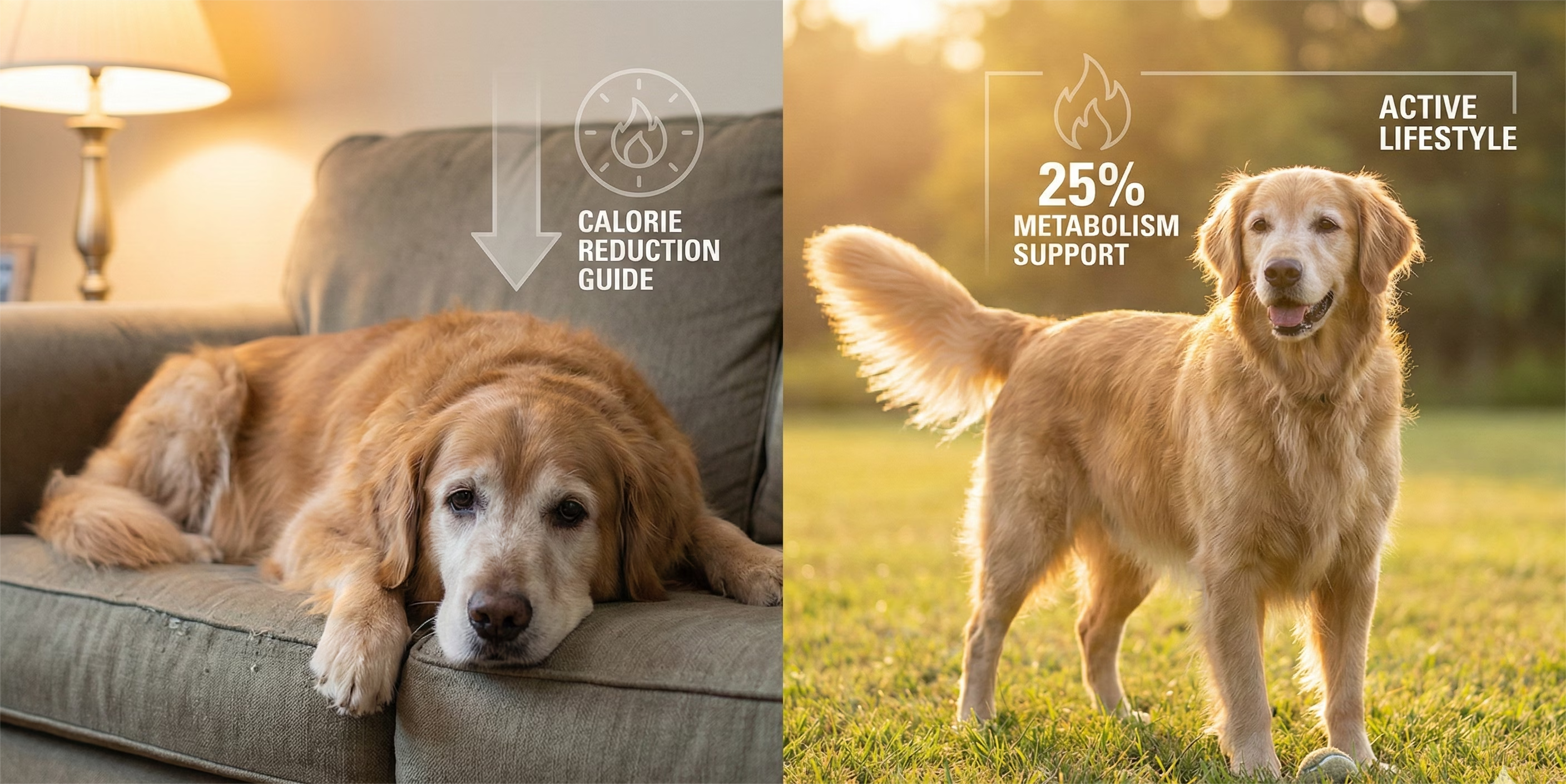

Here's something most dog owners aren't prepared for: by the time your dog is 7 years old, their metabolism has already slowed by up to 25%. That means the same bowl of food they've been eating since they were two is now quietly making them gain weight, lose muscle, and age faster than they should.
And the changes are so gradual that you don't notice. One day your dog is bounding off the couch to greet you. The next — or so it feels — they're groaning just to stand up, sleeping 16 hours a day, and ignoring the ball they used to chase for hours.
I went through this with my Golden Retriever, Bailey. She turned eight, and I didn't change a thing about her diet. Same kibble, same portions, same treats. I figured if she was eating well and seemed fine, why fix what wasn't broken?
Then her annual checkup hit me like a truck. She'd gained 11 pounds since her last visit. Her bloodwork showed early kidney stress markers. And her vet told me something I'll never forget: "The food you're feeding her was great when she was four. But she's not four anymore, and her body can't handle this volume of calories."
That conversation changed everything. I spent weeks researching senior dog nutrition — talking to veterinary nutritionists, reading clinical studies, testing different foods and supplements. Within 12 weeks of adjusting Bailey's diet and adding a proper joint supplement, she dropped the extra weight, her energy came back, and she started playing again like she hadn't in over a year.
This guide is everything I learned. Whether your dog is 7 or 17, these are the exact steps to adjust their nutrition so they stay strong, comfortable, and healthy through their golden years.
When Does a Dog Actually Become "Senior"?
This depends entirely on breed size. And most people get it wrong — they wait too long.
- Small breeds (under 20 lbs — Chihuahua, Pomeranian, Shih Tzu): Senior at 10–12 years
- Medium breeds (20–50 lbs — Beagle, Cocker Spaniel, Bulldog): Senior at 8–10 years
- Large breeds (50–90 lbs — Labrador, Golden Retriever, German Shepherd): Senior at 7–8 years
- Giant breeds (90+ lbs — Great Dane, Saint Bernard, Mastiff): Senior as early as 5–6 years
That last one shocks people. A 5-year-old Great Dane is biologically closer to a 60-year-old human. If you have a giant breed and you're reading this thinking "I still have a few years," you probably don't.
Not sure where your dog falls? Check your breed's specific nutritional profile on our breed page — we cover 250+ breeds with age-adjusted calorie targets, ideal weight ranges, and life-stage feeding recommendations.
How Many Calories Does a Senior Dog Actually Need?
Here's the uncomfortable truth: most senior dogs are overfed by 20–40%. Their owners are still serving the same portions they did five years ago, but the dog's metabolism has dropped, their activity level has halved, and those extra calories are turning into fat, joint stress, and organ strain.
A 10-year-old Labrador sleeping on the couch all afternoon does not need the same calories as a 3-year-old Lab chasing tennis balls for two hours. Not even close.
The Numbers
As a general rule, senior dogs need 20–30% fewer calories than adult dogs at their peak. But the exact number varies based on:
- Current body weight and body condition score (BCS)
- Breed and expected adult size
- Activity level — still hiking? Or mostly napping?
- Health conditions — diabetes, kidney disease, and thyroid problems all change calorie needs dramatically
- Spay/neuter status — fixed dogs burn fewer calories at rest
Here's a quick reference table:
| Dog Size | Active Adult (kcal/day) | Senior (kcal/day) | Reduction |
|---|---|---|---|
| Small (10 lbs) | 400–500 | 300–400 | ~20–25% |
| Medium (30 lbs) | 900–1,100 | 650–850 | ~25–30% |
| Large (60 lbs) | 1,400–1,700 | 1,000–1,300 | ~25–30% |
| Giant (100 lbs) | 2,000–2,400 | 1,500–1,800 | ~25% |
These are ballpark numbers. Your individual dog will vary significantly based on breed, metabolism, and health status.
The best way to get your dog's exact calorie target? Use our free pet calorie calculator. Enter your dog's breed, current weight, age, and activity level. It takes 30 seconds and uses the same RER formula that veterinary nutritionists use in clinical practice. You'll get a precise number — not a guess.
Why Senior Dog Nutrition Is More Than Just "Feed Them Less"
Simply cutting portions from your dog's regular food is the #1 mistake I see senior dog owners make. Here's why it backfires:
When you reduce a regular adult food by 25%, you're also reducing every nutrient by 25% — including protein, vitamins, minerals, and fatty acids your aging dog desperately needs more of, not less.
Senior dogs face a unique nutritional paradox: they need fewer calories but more of certain nutrients. Getting this balance wrong is what accelerates aging.
The "Big Three" Nutritional Shifts for Senior Dogs
1. More Protein, Not Less
This one surprises everyone. Older dogs need more high-quality protein to fight sarcopenia — the age-related muscle loss that makes them weak, unstable, and prone to injury. A landmark study in the Journal of Veterinary Internal Medicine found that senior dogs fed higher-protein diets maintained significantly more lean muscle mass than those on reduced-protein formulas.
Look for food with:
- 25–30% protein minimum (on a dry matter basis)
- Real meat as the first ingredient — chicken, turkey, beef, salmon, or lamb
- Named protein sources (run from vague labels like "meat meal" or "animal by-products")
2. Good Fats — But Targeted
Fat is still essential for brain function, coat health, and energy. But too much fat leads to weight gain that hammers aging joints. Aim for:
- 10–15% fat content (lower than typical adult formulas)
- Omega-3 fatty acids from fish oil or salmon — these are anti-inflammatory powerhouses. For senior dogs, they don't just help the coat — they actively reduce joint inflammation, slow cognitive decline, and support immune response
- Named fat sources on the label (chicken fat, salmon oil, flaxseed oil)
3. Fiber and Digestibility Take Priority
Older dogs develop digestive issues. Constipation, loose stools, sensitive stomachs — these get worse with age. A senior-appropriate diet should include:
- Moderate fiber (3–5%) from whole grains, sweet potato, or pumpkin
- Easily digestible ingredients — avoid corn, soy, and wheat fillers
- Probiotics or prebiotics for gut health and better nutrient absorption
The 5-Step Senior Dog Nutrition Plan
Step 1: Get a Senior Wellness Panel From Your Vet
Before you change anything about your dog's diet, get bloodwork done. I can't stress this enough. A simple senior wellness panel (usually $150–$250) screens for:
- Kidney function — early kidney disease requires lower phosphorus diets
- Liver health — affects how your dog metabolizes nutrients and medications
- Thyroid levels — hypothyroidism is rampant in older dogs and causes weight gain regardless of diet
- Blood glucose — catches early diabetes before symptoms appear
- Complete blood count — identifies infections, anemia, or other hidden issues
This isn't optional. The food that's perfect for a healthy senior dog could be genuinely harmful for one with kidney disease. Your vet can also set a target weight and body condition score so you have a real number to work toward — not a guess.
Step 2: Calculate Their Actual Calorie Needs
Stop relying on the feeding guide on the bag. Those guidelines are designed for average, healthy, active adult dogs — not a 10-year-old with arthritis who naps 14 hours a day.
The formula veterinarians use is:
RER = 70 × (body weight in kg) ^ 0.75
Then multiply by a life-stage factor (typically 1.0–1.4 for senior dogs, depending on activity).
That math is tedious — use our free calorie calculator instead. It handles the formula automatically and adjusts for breed, age, and activity level. Takes 30 seconds.
Step 3: Transition to a Senior-Appropriate Food
Don't just dump a new bag of food into the bowl. Senior dogs have sensitive stomachs, and sudden dietary changes cause vomiting, diarrhea, and food refusal.
The safe transition schedule:
- Days 1–3: Mix 25% new food with 75% old food
- Days 4–6: Go 50/50
- Days 7–9: Mix 75% new food with 25% old food
- Day 10+: Full transition to the new formula
If your dog has a history of digestive issues, stretch this to 14 days. Watch their stool — it's the best indicator of how the transition is going. If you see diarrhea or they refuse to eat, slow down.
What to look for in a senior dog food:
| Feature | What to Look For | What to Avoid |
|---|---|---|
| Protein | 25–30%+, real meat first | "Meat meal," by-products |
| Fat | 10–15% | Above 18% |
| Fiber | 3–5% | Below 2% |
| Omega-3s | Fish oil, salmon oil | No omega source listed |
| Joint support | Glucosamine, chondroitin | No joint ingredients |
| Fillers | None | Corn, soy, wheat gluten |
Step 4: Add a Joint Supplement — This Is the Game-Changer
I'll be straightforward with you: most dog supplements are garbage. They contain underdosed ingredients, filler powders, and marketing claims that wouldn't survive five minutes of scientific scrutiny.
But joint supplements are the exception. For senior dogs specifically, there is legitimate, peer-reviewed clinical evidence supporting glucosamine and chondroitin supplementation. These compounds help maintain cartilage, reduce inflammation, and measurably improve mobility in aging joints.
The one I've used with Bailey — and the one I consistently recommend to every senior dog owner — is Nutramax Cosequin Joint Health Supplement.
Why We Recommend Nutramax Cosequin for Senior Dogs
Nutramax Cosequin Joint Health Supplement — Glucosamine, Chondroitin, MSM + HA — 75 Chewable Tablets
This isn't a random Amazon pick. Nutramax is the #1 veterinarian-recommended joint health supplement brand in the United States, and Cosequin specifically has been used in veterinary practice for over 20 years. There's a reason every vet clinic in the country has this product on its shelf.
Why it stands out:
- 4.7 stars on Amazon with a massive 86,872 reviews — you simply can't fake that volume of feedback
- 9,000+ bought in the past month and Amazon's Choice badge — this isn't a niche product, it's the industry standard
- Glucosamine + Chondroitin + MSM + Hyaluronic Acid (HA) — the "big four" ingredients for joint health, all at clinically meaningful doses. Most cheaper supplements skip the HA, which is critical for joint lubrication
- Research-backed — Nutramax actually invests in clinical studies. Their formulations are tested for bioavailability, meaning the ingredients actually get absorbed by your dog's body — not just passed through
- Chewable tablet format — Bailey takes hers like a treat. No pills to crush, no powders to measure, no fighting your dog to swallow a capsule
- Safe for long-term daily use — no known serious side effects with extended supplementation. Many dogs stay on it for years
- Works for all sizes — dosing adjusts by weight, so it works whether you have a 10-pound Yorkie or a 100-pound Rottweiler
- Made in the USA under strict quality control and GMP manufacturing standards
Real results pet owners are seeing:
Pet parents consistently report visible improvements within 3–6 weeks: getting up more easily in the morning, more willingness to climb stairs, less stiffness after naps, and generally more energy at playtime. One reviewer described it as "giving me my old dog back" after her 12-year-old Lab had practically stopped moving. Another said their senior Shepherd went from limping on walks to trotting comfortably within a month.
I experienced the same thing with Bailey. Within four weeks of starting Cosequin, she was getting up from her bed without groaning. By week six, she was chasing squirrels in the yard again. That supplement, combined with the dietary changes, gave me back the dog I thought I'd lost to old age.
Who it's best for:
- Senior dogs showing any signs of joint stiffness, limping, or reluctance to move
- Large and giant breeds prone to hip dysplasia and arthritis
- Dogs recovering from orthopedic surgery (ACL repair, hip surgery)
- Active senior dogs where you want to protect their joints proactively
- Any dog over 7 that you want to keep mobile, comfortable, and pain-free
How to use it:
Nutramax recommends an initial loading period of 4–6 weeks at a higher dose, then tapering to a daily maintenance dose. Full dosing instructions are on the label and based on your dog's weight. Always confirm with your vet before starting.
Price: $24.95 for 75 chewable tablets ($0.33 per tablet). That's roughly $7.50 per month for a medium-sized dog on maintenance. Subscribe & Save drops it to $23.70 ($0.32/tablet). For something that can genuinely transform your senior dog's quality of life, that's a bargain.
Step 5: Monitor and Adjust Monthly
Senior dog nutrition isn't "set it and forget it." Your dog's needs change as they age — sometimes month to month. Here's what to track:
- Weigh your dog monthly — same scale, same time of day
- Do the rib test — you should feel ribs easily with light pressure but not see them
- Watch energy levels — more energy after dietary changes = good sign
- Monitor stool quality — firm, consistent stools mean the food agrees with them
- Check water intake — sudden increase in thirst can signal kidney issues or diabetes
If your dog's weight stalls or starts creeping up, reduce daily calories by 10% and check in with your vet.
5 Common Senior Dog Feeding Mistakes
Mistake 1: Feeding the Same Amount They Ate at Age 3
The fix: Reduce portions by 20–30% and recalculate using our calorie calculator. What fed an active 4-year-old Lab will absolutely make a 10-year-old Lab overweight.
Mistake 2: Cutting Protein to "Be Easy on Their Kidneys"
The fix: Unless your vet has diagnosed kidney disease, your senior dog needs more protein, not less. This myth has caused untold muscle loss in aging dogs. Higher protein preserves muscle mass and strength — both of which directly affect mobility and quality of life.
Mistake 3: Ignoring Dental Problems
The fix: Dental disease is rampant in senior dogs and makes eating painful. If your dog is eating less, dropping food, chewing on one side, or avoiding hard kibble, get a dental exam immediately. Sometimes the solution is as simple as softening kibble with warm water or switching to wet food.
Mistake 4: Forgetting About Water
The fix: Senior dogs often don't drink enough, which worsens kidney function, digestion, and joint lubrication. Add warm water or low-sodium bone broth to their meals. Try a pet water fountain — many dogs drink significantly more from moving water than from a still bowl.
Mistake 5: Drowning Them in Treats
The fix: Treats should never exceed 10% of your dog's daily calorie intake. A senior dog eating 800 calories per day gets a maximum of 80 calories in treats. That's 2–3 small training treats — not half a dental chew or a spoonful of peanut butter. Better options: baby carrots (4 kcal each), green beans (7 kcal per 10), or tiny pieces of plain cooked chicken (12 kcal each).
Frequently Asked Questions
How Do I Know If My Senior Dog Is Overweight?
Run your hands along their sides. You should feel ribs easily with gentle pressure, but not see them prominently. If you have to dig to find ribs, your dog is carrying excess weight. Use the overhead view too — you should see a visible waist. Your vet can give a formal body condition score (BCS) on a 1-to-9 scale. Ideal for seniors is 4–5.
Should I Feed My Senior Dog Wet Food or Dry Food?
Either works, but many seniors do better with wet food or a mix. Wet food is easier to chew (critical if teeth are worn or painful), contains more moisture (supports kidney health — a major concern in older dogs), and is usually more palatable for dogs whose sense of smell is fading. If sticking with kibble, add warm water to soften it and release more aroma.
What About Grain-Free Food for Senior Dogs?
Unless your vet has specifically diagnosed a grain allergy, stick with food that includes whole grains. The FDA has been investigating a potential link between grain-free diets and dilated cardiomyopathy (DCM) in dogs. Healthy grains like brown rice, oatmeal, and barley provide valuable fiber, B vitamins, and sustained energy for aging dogs.
How Often Should I Feed My Senior Dog?
Twice a day is ideal for most senior dogs. Some owners split it into three smaller meals if their dog has digestive sensitivity or acid reflux. Consistency matters — feed at the same times every day. Senior dogs thrive on routine, and a consistent schedule makes it much easier to notice changes in appetite that could signal a health problem.
Can I Give Human Food to My Senior Dog?
Some human foods are safe and genuinely beneficial: plain cooked chicken, scrambled eggs (no butter or seasoning), steamed sweet potato, plain pumpkin puree (not pie filling), and blueberries are all excellent in moderation. But avoid: onions, garlic, grapes, raisins, chocolate, xylitol (artificial sweetener), and macadamia nuts — these are toxic to dogs at any age.
When Should I Take My Senior Dog to the Vet About Their Diet?
Immediately if you notice: unexplained weight loss or gain, sudden changes in appetite, significantly increased thirst or urination, vomiting or diarrhea lasting more than 24 hours, visible muscle wasting, or difficulty standing or walking. These can signal kidney disease, diabetes, thyroid dysfunction, or other conditions that require specific dietary adjustments.
Do Senior Dogs Need Supplements?
Most senior dogs benefit from two types of supplements: omega-3 fish oil (for brain health, coat, and anti-inflammatory effects) and a joint supplement with glucosamine and chondroitin (for cartilage protection and mobility). Beyond that, a high-quality senior food should provide everything else they need. Always clear supplements with your vet first.
Start Today — Your Dog Is Counting on You
Your senior dog's nutrition journey starts with one number: their exact daily calorie target. Once you know that, everything else — food choice, portion size, treat budgets, supplement timing — falls into place.
Use our free calorie calculator right now to get your senior dog's personalized calorie recommendation. It takes 30 seconds, it's completely free, and it uses the same formula veterinary nutritionists rely on in clinical practice.
Bailey is 11 now. She's still at her target weight, she's still chasing squirrels, and her joints are holding up beautifully on Cosequin. The dietary changes I made when she was eight gave me extra years with her that I almost lost to neglect I didn't even know I was guilty of.
Your dog gave you their best years without hesitation. Make sure their golden years actually feel golden.
Disclosure: This post contains affiliate links. If you purchase through our links, we may earn a small commission at no extra cost to you. We only recommend products we genuinely believe in and have thoroughly researched.