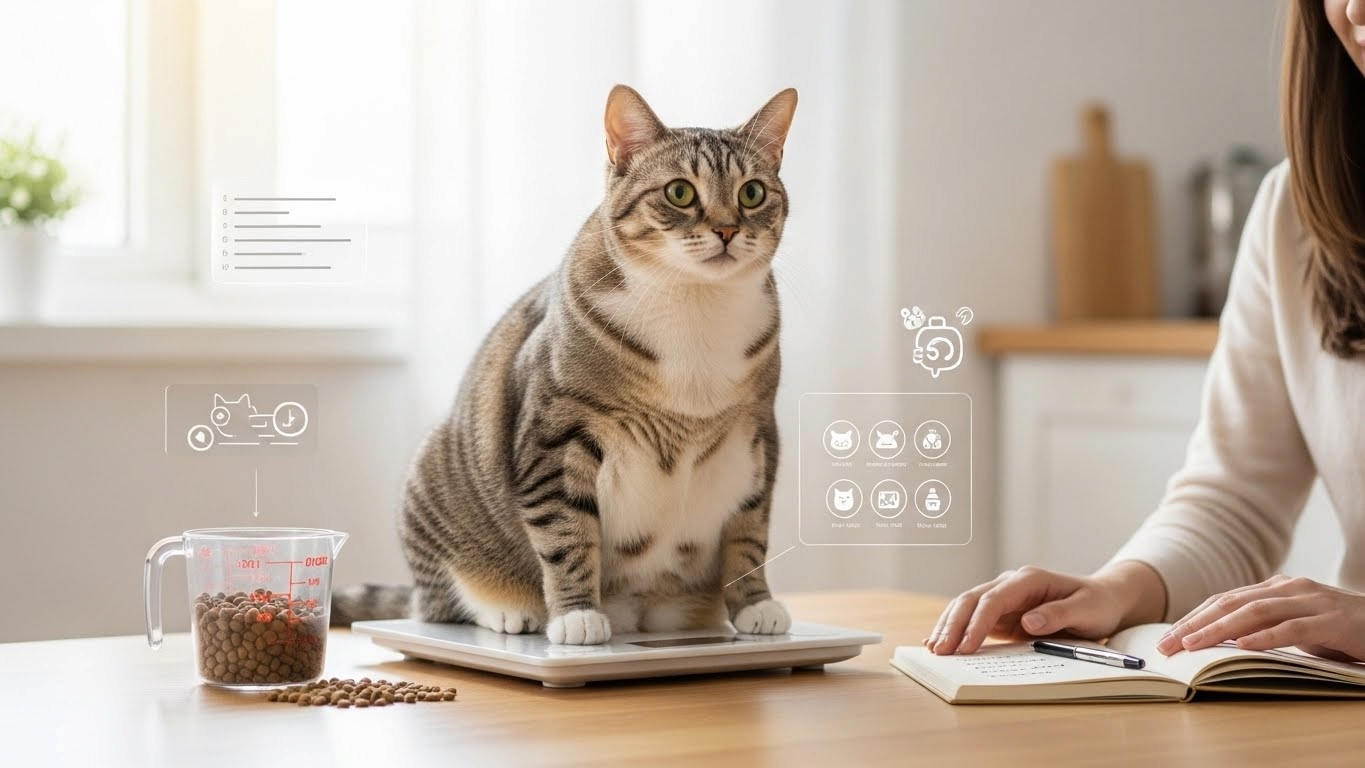

Overweight cat problems are more common than many people think and can make your cat less active, more tired, and more likely to get illnesses like diabetes and sore joints. Catching weight gain early gives your cat the best chance for a longer, healthier life.
This blog gives clear, simple steps to help your cat lose weight safely, including how to measure calories, when to see a vet, easy feeding and play ideas, and tools you can use right away so you can start helping your cat today.
What Overweight Cat Problems Are and Why They Matter
Overweight generally means a cat is about 10 to 20 percent above its ideal body weight. Obese cats are more than 20 percent above ideal weight. Veterinarians use a body condition score (BCS), usually a nine-point scale, to assess whether a cat is underweight, ideal, overweight, or obese. Cats with higher BCS scores are at greater risk for conditions that reduce quality and length of life.
Overweight and obese cats have a higher risk of developing diabetes, osteoarthritis, hepatic lipidosis (fatty liver), and other chronic issues. Small, consistent changes in calories and activity are safer and more effective than quick fixes. Early action generally improves outcomes and is less costly than treating chronic diseases.
What Causes Cat Obesity
There are several common reasons cats gain unwanted weight.
- Excess calorie intake: Free-feeding dry food or giving oversized portions increases daily calories.
- Low activity: Indoor lifestyles, lack of enrichment, and aging reduce energy expenditure.
- Physiological changes after neutering or spaying: Many cats experience appetite increases and metabolic changes after surgery.
- High-calorie treats and human food: These add extra kcal that are often not accounted for.
- Underlying medical issues: Some medical conditions and medications can affect weight. Always rule out medical causes with your veterinarian before assuming diet alone is to blame.
Understanding Overweight Cat Problems and Medical Risks
Diabetes mellitus is more likely in overweight cats because excess fat contributes to insulin resistance. Extra weight also stresses joints and increases the risk of osteoarthritis, which reduces mobility and activity. Rapid or excessive weight loss can trigger hepatic lipidosis, a potentially life-threatening liver condition in cats. Overall, obesity tends to reduce life expectancy and lower quality of life through decreased play, grooming, and general well-being.
How Veterinarians Estimate Calorie Needs for Cats
Veterinarians commonly calculate a cat's Resting Energy Requirement (RER) and then apply multipliers based on activity and life stage. The RER formula frequently used is:
RER = 70 × (body weight in kg)^0.75
For many adult cats, maintenance needs fall in a range of about 1.0 to 1. 2 times RER, with indoor and neutered cats often on the lower end. For weight loss, vets calculate calories using the cat's ideal weight and set a conservative deficit, then monitor progress and adjust as needed.
Practical Calorie Targets: Examples
These examples are approximate and intended to help estimate needs. Confirm with your vet and consider using a cat calorie calculator for a personalized number.
- A 3 kg (6.6 lb) adult cat: RER ≈ 140 kcal/day, maintenance approximately 140 to 170 kcal/day.
- A 4 kg (8. 8 lb) adult cat: RER ≈ 166 kcal/day, maintenance approximately 166 to 200 kcal/day.
- A 5 kg (11 lb) adult cat: RER ≈ 190 kcal/day, maintenance approximately 190 to 230 kcal/day. When a cat is overweight, many veterinarians aim to feed based on the cat's ideal weight rather than current weight, often reducing current intake by about 10 to 20 percent to start. A safe target weight-loss pace is generally around 0.5 to 1.0 percent of body weight per week. Slower loss is safer because of hepatic lipidosis risk.
How the PetCalorie Calculator Can Help
The PetCalorie Calculator gives you a tailored daily kcal estimate based on your cat's current weight, ideal weight, age, and activity level. Use the calculator to:
- Get an evidence-based starting calorie target for maintenance or weight loss
- Compare current food intake to the recommended kcal
- Generate a simple sample meal plan to make measuring easier
How to Start a Safe Weight-Loss Plan for Your Cat
- Begin with a veterinary visit to rule out medical causes, confirm an ideal weight, and set a safe weekly loss rate.
- Calculate calories using RER and appropriate multipliers or a trusted Cat Calorie Calculator.
- Set a conservative deficit as advised by your vet and measure food precisely with a kitchen scale.
- Avoid free-feeding. If recommended, switch to a higher-protein, lower-calorie diet that preserves lean mass.
- Increase activity with short play sessions multiple times per day, introduce puzzle feeders, and provide vertical spaces to encourage movement.
- Monitor progress by weighing the cat every one to two weeks and adjusting the plan slowly.
Never reduce calories too quickly.
Food, Treats, and Feeding Strategies for Calorie Control
- Measure dry and wet food by grams and check calories per can or per 100 grams.
- Consider increasing wet food or mixing wet and dry to improve satiety since wet food typically has lower kcal per gram and more water.
- Count treats as part of the daily calorie allowance and choose low-calorie treats or break treats into tiny pieces.
- Use puzzle feeders and treat-dispensing toys to slow eating and add movement.
- Consider scheduled meal feeding two to three times per day instead of leaving food available all day.
How to Track Progress and When to Change the Plan
Weigh the cat every one to two weeks and keep a simple log. If there is no measurable weight change after four to six weeks, re-check portion sizes, recount treats, and revisit calorie calculations. Schedule a veterinary follow-up if progress stalls. If weight loss is too fast or the cat's appetite decreases, stop the diet and consult the veterinarian.
Sample Three-Week Starter Routine
| Week | Actions |
|---|---|
| Week 1 | Veterinary check, calculate a new calorie target, start portion control, and measure food. Increase play to two short sessions per day. |
| Week 2 | Introduce a puzzle feeder for one meal and replace one treat with an interactive toy reward. Weigh and record the cat. |
| Week 3 | Increase play sessions to three short sessions daily and reassess calorie targets based on weight trend. |
When to Consult a Vet or a Pet Nutritionist
Consult a professional:
- At the start of any weight-loss plan
- If the cat has other health problems such as kidney disease or diabetes
- If weight loss occurs too quickly or appetite declines
Professional supervision reduces risk and improves long-term success.
Practical Product and Tool Suggestions
- Use a kitchen scale to measure food by grams.
- Try puzzle feeders and food-dispensing toys to increase activity.
- Use a Cat Calorie Calculator to estimate daily kcal and set targets.
- Keep a weekly weight log in a notebook or spreadsheet.
FAQs
How quickly should an overweight cat lose weight?
Aim for slow, steady loss: about 0.5 to 1.0 percent of body weight per week. Faster loss increases the risk of hepatic lipidosis. Always follow your veterinarian's plan.
How many calories should an overweight cat eat?
There is no single number that fits every cat. Calorie targets depend on current weight, ideal weight, age, and activity level. Use a cat calorie calculator and follow your vet's recommendations. A typical approach is to feed based on the cat's ideal weight and start with a modest deficit.
Can indoor cats avoid obesity?
Yes. Portion control, environmental enrichment such as toys and climbing structures, and scheduled play can help indoor cats maintain a healthy weight.
Are weight control foods safe?
Many veterinary weight-management diets are formulated to reduce calorie density while preserving protein. These can be effective when used under veterinary guidance, especially for cats with comorbid conditions.
Is rapid weight loss dangerous?
Yes. Rapid weight loss in cats can lead to hepatic lipidosis. If your cat loses more than about 1 to 2 percent of body weight per week or shows reduced appetite or lethargy, contact your veterinarian immediately.
Conclusion
Overweight cat problems are common but manageable. The safest, most effective strategy is a veterinarian-supervised plan that combines precise calorie control, improved food choices, and increased activity. Start with a vet check, use a calorie calculator to set a realistic target, and make small sustainable changes. Try the PetCalorie Calculator to get a tailored starting number and a sample meal plan.