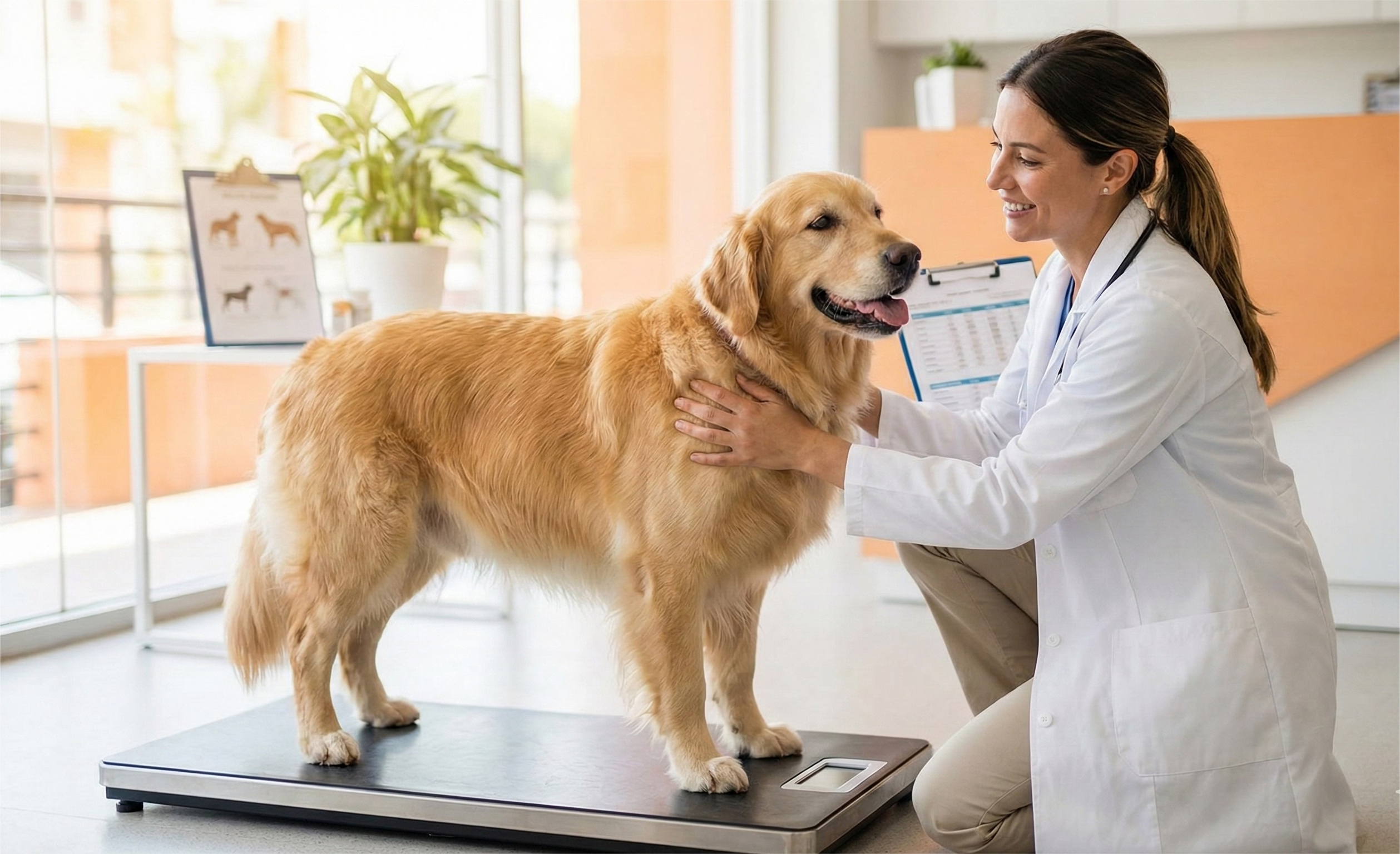

Here's a number that should scare every dog owner: 56% of dogs in the United States are overweight or obese. That's over 50 million dogs carrying extra weight that's silently chipping away at their health, their mobility, and their lifespan.
And the worst part? Most owners don't even realize their dog has a weight problem. We get so used to how our pets look every day that we stop noticing the extra padding around their ribs, the belly that doesn't tuck up anymore, or the fact that walks are getting shorter because they're out of breath.
I've been there myself. My Labrador, Cooper, looked perfectly fine to me — until my vet told me he was 8 pounds overweight. I was shocked. But once I understood how to properly assess his body condition and adjust his calories, he dropped the weight in about 10 weeks and became a completely different dog. More energy, less panting, and his joints stopped bothering him.
In this guide, I'm going to walk you through everything I learned — from figuring out if your dog is actually overweight, to the exact steps you can take to help them shed those extra pounds safely. No crash diets. No gimmicks. Just a proven, vet-backed approach that works.
How to Tell If Your Dog Is Overweight
Forget the bathroom scale for a minute. The most reliable way to assess your dog's weight is something called the Body Condition Score (BCS) — a 1-to-9 scale that vets use worldwide. Here's how you can do it at home:
The 3 Quick Tests
1. The Rib Test (most important) Place your hands on your dog's sides, thumbs on the spine, fingers spread over the ribs. Can you feel each rib easily with gentle pressure? On a healthy dog, you should feel the ribs like the back of your hand — just under a thin layer of fat. If you have to press hard to find them, or can't feel them at all, your dog is carrying too much weight.
2. The Overhead View Stand directly above your dog and look down. You should see a clear waist — an inward curve between the ribs and the hips. If your dog looks like a sausage or a barrel from above, with no visible waist, that's a red flag.
3. The Side Profile Look at your dog from the side. A healthy dog's belly should tuck upward from the ribcage to the hind legs — this is called the "abdominal tuck." If the belly hangs level with the chest or sags below it, your dog is likely overweight.
Where does your dog score? Use our free calorie calculator to find out exactly how many calories your dog needs based on their breed, weight, age, and activity level. It takes 30 seconds and could be the turning point for their health.
Breed-Specific Weight Ranges
Different breeds carry weight differently. A Greyhound at 70 lbs is perfectly healthy, but a Beagle at 40 lbs might already be overweight. That's why breed-specific guidelines matter. Check your dog's ideal range on our dog breed pages — we cover over 250 breeds with target weights and nutritional needs.
Why Dog Obesity Is More Dangerous Than You Think
Carrying extra weight isn't just a cosmetic issue. It's a medical one. Here's what the research shows:
- Shortened lifespan — A landmark Purina study found that overweight dogs live an average of 2.5 years less than their lean counterparts. That's 2.5 fewer years of walks, belly rubs, and tail wags.
- Joint disease and arthritis — Extra weight puts enormous stress on joints. For every 1 pound of excess weight, your dog's joints feel an additional 4 pounds of pressure. A dog that's 10 lbs overweight is effectively putting 40 extra pounds of stress on their knees and hips with every step.
- Diabetes — Overweight dogs are significantly more likely to develop Type 2 diabetes, which requires lifelong insulin injections and management.
- Heart and respiratory problems — Excess fat around the chest literally makes it harder for your dog to breathe. Ever notice your overweight dog panting heavily after a short walk? That's not just being out of shape — it's their body struggling.
- Increased surgical risk — Overweight dogs face higher risks of complications under anesthesia. If your dog ever needs emergency surgery, those extra pounds become genuinely dangerous.
- Skin infections and coat problems — Fat folds trap moisture and bacteria, leading to chronic skin infections, hot spots, and a dull coat.
The bottom line: helping your dog lose weight isn't about looks. It's about giving them more healthy years with you.
The 7-Step Dog Weight Loss Plan
Step 1: Visit Your Veterinarian First
Before you cut a single calorie, take your dog to the vet. They'll run a physical exam, check bloodwork, and rule out medical causes of weight gain like hypothyroidism or Cushing's disease. Your vet will also set a realistic target weight and a safe timeline for getting there.
This step isn't optional. Crash dieting a dog without vet guidance can cause serious nutritional deficiencies, muscle wasting, and even liver damage in severe cases.
Step 2: Calculate Your Dog's Target Calories
This is where most owners go wrong. They guess at portions, or they follow the feeding guide on the back of the kibble bag — which is almost always too generous because the manufacturer wants you to buy more food.
Instead, you need a science-based calorie target. The formula veterinarians use is:
RER = 70 × (body weight in kg) ^ 0.75
Then you multiply by a weight loss factor (typically 1.0 to 1.2 × RER) to get the daily calorie target.
That math is confusing, right? Don't worry — use our free calorie calculator instead. Just enter your dog's breed, current weight, age, and activity level, and we'll give you the exact number in seconds. You can then select the "weight loss" goal to get a safe calorie reduction target.
Step 3: Switch to a Weight Management Dog Food
Not all dog food is created equal when it comes to weight loss. You need a food that's:
- Lower in calories per cup (so you can feed satisfying portions without overshooting)
- High in protein (to preserve lean muscle while losing fat)
- Rich in fiber (to keep your dog feeling full between meals)
- Free of fillers and empty carbs (corn syrup, wheat gluten, artificial preservatives)
Here are the two foods I recommend after researching dozens of formulas and reading thousands of reviews:
Our #1 Pick: Hill's Science Diet Perfect Weight
Hill's Science Diet Perfect Weight Large Breed — Chicken Recipe, 25 lb Bag
I recommend Hill's Perfect Weight for one simple reason: it has clinical evidence behind it. This isn't marketing talk — Hill's has published studies showing visible weight loss results within 10 weeks when fed according to their guidelines.
Why it stands out:
- 4.7 stars on Amazon with 337+ reviews and Amazon's Choice badge
- 1,000+ bags sold per month — this isn't a niche product, it's a proven seller
- Clinically tested — formulated by veterinary nutritionists with real trial data
- Lean protein from real chicken with prebiotic fiber for digestive health
- L-carnitine and coconut oil — help convert stored fat into energy
- Supports joints, skin, coat, and digestion alongside weight management
- No artificial colors, flavors, or preservatives
- 100% satisfaction guarantee from Hill's — if your dog doesn't like it, return it for a full refund
Real customer results: Pet owners consistently report their dogs losing weight visibly within 4–8 weeks. One reviewer's Golden Retriever lost 20 pounds in just under two months. Another's Corgi dropped a couple of pounds and had noticeably more energy and playfulness. Multiple reviewers mention their vets specifically recommended this product.
Best for: All adult dogs ages 1–5 who need to lose weight, especially large breed dogs prone to joint stress from excess weight.
Price: $92.99 for a 25 lb bag ($3.72/lb) — or save an extra 5% with Subscribe & Save.
Budget Pick: Purina Pro Plan Weight Management
Purina Pro Plan Weight Management — Shredded Blend Chicken & Rice, 34 lb Bag
If Hill's is out of your budget, Purina Pro Plan is an outstanding alternative. This is the weight management formula that most veterinary clinics stock in their own waiting rooms — there's a reason for that.
Why it's our budget pick:
- 4.6 stars on Amazon with a massive 6,074 reviews — you can't fake that kind of feedback
- 4,000+ bags sold per month and Amazon's Choice badge
- Shredded blend texture — a mix of crunchy kibble and tender, meaty pieces that dogs go crazy for
- High protein, low fat — supports lean muscle while reducing body fat
- Live probiotics (guaranteed) for better digestion — your dog actually absorbs more nutrients from every meal
- Rich in omega fatty acids for healthy skin and a shiny coat during weight loss
- No artificial colors or flavors
- Vet-recommended formula — developed with input from veterinary nutritionists
Real customer results: Reviewers consistently praise the Shredded Blend texture for converting picky eaters. One reviewer's Lab mix refused three other weight management foods before finally eating Pro Plan enthusiastically. Another reported their Husky lost 7 pounds over 6 weeks without any fuss.
Best for: Budget-conscious pet owners who still want vet-quality nutrition. Also great for picky eaters who prefer textured food over plain kibble.
Price: $77.48 for a 34 lb bag ($2.28/lb) — that's 39% less per pound than Hill's, making it the clear value winner.
Quick comparison:
| Feature | Hill's Perfect Weight | Purina Pro Plan Weight Mgmt |
|---|---|---|
| Amazon rating | ⭐ 4.7 (337 reviews) | ⭐ 4.6 (6,074 reviews) |
| Bought per month | 1,000+ | 4,000+ |
| Price per lb | $3.72 | $2.28 |
| Best feature | Clinical evidence, L-carnitine | Live probiotics, shredded texture |
| Best for | Large breeds, maximum results | Budget buyers, picky eaters |
| Satisfaction guarantee | ✅ Hill's 100% guarantee | ❌ |
Step 4: Measure Every Meal With a Kitchen Scale
This is the single most impactful thing you can do, and it costs about $10. Measuring cups are shockingly inaccurate — studies show that using a cup can overshoot the correct portion by 20–50% depending on kibble size and shape.
Buy a simple digital kitchen scale and weigh every meal in grams. Your dog food label lists calories per cup and weight per cup — use those numbers along with your calorie target from our calculator to get the exact portion size. No guessing.
Step 5: Follow the 90/10 Treat Rule
Treats should be no more than 10% of your dog's total daily calories. This is the rule that catches the most owners off guard. Let me put it in perspective:
- If your dog's daily calorie target is 800 kcal, treats should total no more than 80 kcal
- A single Milk-Bone biscuit has about 40 kcal
- One tablespoon of peanut butter has 94 kcal — that's already over the entire treat budget!
Better options for low-calorie treats:
- Baby carrots (4 kcal each)
- Green beans (plain, no salt — 7 kcal per 10 beans)
- Apple slices (no seeds — 15 kcal per slice)
- Ice cubes (0 calories, and most dogs love them)
- Small pieces of plain cooked chicken (12 kcal per piece)
Subtract every treat from the daily food portion. If you gave 60 kcal in treats today, your dog's dinner gets 60 fewer calories of kibble.
Step 6: Increase Exercise Gradually
Diet is roughly 70% of the weight loss equation, but exercise matters too. The key word is gradually — don't take a couch-potato dog on a 3-mile run on day one. That's a recipe for injury.
A safe progression:
- Weeks 1–2: Add 5–10 extra minutes to your existing daily walk
- Weeks 3–4: Increase total walk time to 30 minutes, twice daily
- Weeks 5+: Introduce fetch, swimming, or light jogging if your dog enjoys it
Swimming is particularly great for overweight dogs because it's zero-impact on joints while providing excellent cardiovascular exercise.
Step 7: Track Progress Weekly
Weigh your dog once a week, same time, same scale. Don't weigh daily — weight fluctuates from water, meals, and bathroom habits. Weekly is the right interval.
What to expect:
- Safe weight loss rate: 1–2% of body weight per week
- For a 80 lb dog: That's roughly 0.8–1.6 lbs per week, or 3–6 lbs per month
- Total timeline: Most dogs reach their target weight in 8–16 weeks
Record the numbers in your phone's notes app. If weight stalls for more than 2 consecutive weeks, reduce daily calories by 10% and talk to your vet.
Feeding Schedule for Weight Loss
Most veterinarians recommend splitting your dog's daily calories across 2–3 meals rather than one big meal:
| Meal | Time | Why |
|---|---|---|
| Breakfast | 7–8 AM | Kickstarts metabolism after overnight fasting |
| Lunch (optional) | 12–1 PM | Keeps blood sugar stable, reduces begging |
| Dinner | 5–6 PM | Main meal, gives time to digest before sleep |
Pro tips:
- Slow feeder bowls make meals last 5–10x longer. They work. Dogs who scarf a bowl in 30 seconds feel hungry again in minutes. A slow feeder forces 10–15 minutes of eating, which gives their brain time to register fullness.
- Add warm water to kibble — it expands the food volume and releases more aroma, making the portion look and smell bigger without adding calories.
5 Common Weight Loss Mistakes to Avoid
1. "I'm already feeding the recommended amount" The recommended amount on your dog food bag is based on an active, intact, average-metabolism dog. If your dog is spayed/neutered, sedentary, or a breed with a slow metabolism, you may need 20–30% less than the bag suggests.
2. Forgetting about other family members Dad sneaks a piece of cheese. The kids share their lunch. Grandma gives "just a little bite." All of those add up. Get everyone in the household on the same page — post the treat rules on the fridge if you have to.
3. Switching to "light" food without adjusting portions Light or "lite" dog foods have fewer calories per cup, but some owners compensate by feeding more. Always calculate portions based on total daily calories, not just food type.
4. Cutting too many calories too fast Extreme calorie restriction can cause hepatic lipidosis (fatty liver disease), muscle loss, and nutritional deficiencies. Never cut more than 20% from current intake without vet supervision. Slow and steady wins this race.
5. Expecting overnight results Healthy weight loss takes 2–4 months for most dogs. If your dog took 2 years to gain the weight, it's not coming off in 2 weeks. Be patient, be consistent, and trust the process.
Frequently Asked Questions
How many calories should my overweight dog eat per day?
It depends on their size, breed, and target weight. As a general guideline, most overweight dogs do well on 1.0–1.2 × their Resting Energy Requirement (RER). For a 30 kg dog, that's roughly 670–800 calories per day for weight loss. For precision, use our calorie calculator — it handles the math for you.
Can overweight dogs eat regular food in smaller portions?
Technically yes, but it's not ideal. Regular food at reduced portions can leave your dog nutritionally deficient because they're getting less of everything — including essential vitamins and minerals. Weight management formulas are specifically designed to provide complete nutrition at lower calorie counts.
My dog is always hungry on a diet. What can I do?
Add fiber-rich vegetables like green beans or canned pumpkin (plain, not pie filling) to meals — they add volume without meaningful calories. Slow feeder bowls, puzzle toys, and splitting meals into 3 servings also help.
Is my dog overweight or just a large breed?
Great question. A 100-pound Labrador is definitely overweight, but a 100-pound German Shepherd might be perfectly healthy. That's why body condition scoring matters more than raw weight numbers. Use the rib test and overhead view from Section 1 of this guide.
How long does it take for a dog to lose weight?
At a safe rate of 1–2% body weight per week, most moderately overweight dogs reach their target in 8–16 weeks. Severely overweight dogs may take 4–6 months. Your vet will set a realistic timeline based on your dog's starting point.
Start Today — It's Free
Your dog's weight loss journey starts with one number: their daily calorie target. Once you know that, everything else — food choice, portion size, treat limits — falls into place.
Use our free calorie calculator right now to get your dog's personalized calorie recommendation. It takes 30 seconds, it's completely free, and it could add years to your dog's life.
Your dog is counting on you. Let's do this.
Disclosure: This post contains affiliate links. If you purchase through our links, we may earn a small commission at no extra cost to you. We only recommend products we genuinely believe in and have thoroughly researched.