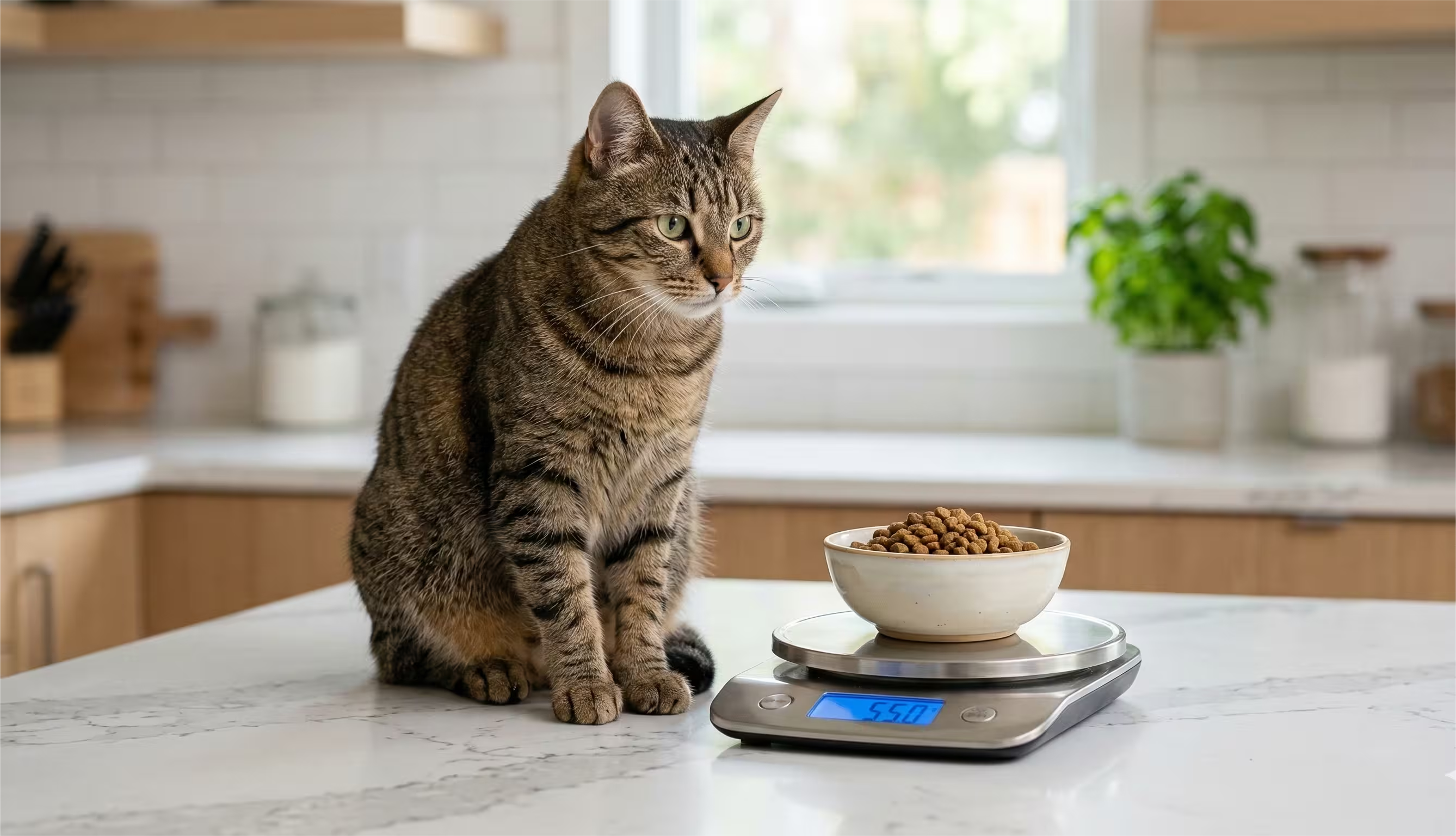

If you've ever Googled "how much should I feed my cat," you already know the confusion: one source says free-feed dry kibble, another says strict wet-food-only meals, and your vet says something different entirely.
Here's the truth: there is no single right answer — because the right feeding plan depends on your cat's age, weight, activity level, indoor/outdoor status, and health conditions. A 4-month-old kitten has wildly different nutritional needs than a 12-year-old indoor cat with kidney concerns.
This is the complete, veterinarian-reviewed guide to feeding your cat at every life stage — with exact calorie targets, feeding schedules, wet vs. dry food comparisons, and everything you need to stop guessing and start measuring.
How Many Calories Does a Cat Actually Need?
The veterinary formula for calculating a cat's daily calorie needs is:
RER (kcal/day) = 70 × (body weight in kg) ^ 0.75
Then multiply by a life stage factor:
| Life Stage | Multiplier | Example (10-lb / 4.5 kg cat) |
|---|---|---|
| Kitten (under 4 months) | 2.5 × RER | ~548 kcal/day |
| Kitten (4–12 months) | 2.0 × RER | ~438 kcal/day |
| Intact adult | 1.4 × RER | ~307 kcal/day |
| Neutered/spayed adult | 1.2 × RER | ~263 kcal/day |
| Indoor-only adult | 1.0–1.2 × RER | ~219–263 kcal/day |
| Overweight (weight loss) | 0.8 × RER for ideal weight | ~175 kcal/day |
| Senior (7–11 years) | 1.1–1.4 × RER | ~241–307 kcal/day |
| Geriatric (12+ years) | 1.1–1.6 × RER | ~241–351 kcal/day |
| Pregnant | 1.6–2.0 × RER | ~351–438 kcal/day |
| Lactating | 2.0–6.0 × RER | ~438–1,314 kcal/day |
Skip the math. Use our free cat calorie calculator — select your breed, enter the weight, and get a precise calorie target in seconds. Over 76 cat breeds supported.
Cat Calorie Chart: Daily Calorie Needs by Weight
Here's the quick-reference chart every cat owner needs:
| Cat's Weight | Weight (kg) | RER (kcal) | Indoor Adult (1.2×) | Weight Loss (0.8×) | Kitten (2.0×) |
|---|---|---|---|---|---|
| 5 lbs | 2.3 | 131 | 157 | 105 | 262 |
| 6 lbs | 2.7 | 148 | 178 | 118 | 296 |
| 7 lbs | 3.2 | 164 | 197 | 131 | 328 |
| 8 lbs | 3.6 | 179 | 215 | 143 | 358 |
| 9 lbs | 4.1 | 194 | 233 | 155 | 388 |
| 10 lbs | 4.5 | 219 | 263 | 175 | 438 |
| 11 lbs | 5.0 | 234 | 281 | 187 | 468 |
| 12 lbs | 5.4 | 248 | 298 | 198 | 496 |
| 14 lbs | 6.4 | 275 | 330 | 220 | 550 |
| 16 lbs | 7.3 | 301 | 361 | 241 | 602 |
| 18 lbs | 8.2 | 326 | 391 | 261 | 652 |
| 20 lbs | 9.1 | 350 | 420 | 280 | 700 |
Want breed-specific numbers? Our cat calorie calculator covers 76 cat breeds — from Abyssinians to Turkish Vans — with customized recommendations.
Feeding Schedule by Age: Kitten to Senior
Kittens (0–12 Months)
Kittens grow at an explosive rate — they can triple their birth weight in the first 3 weeks. Their calorie needs per pound of body weight are 2–3 times higher than adult cats.
| Age | Meals Per Day | What to Feed | Calories Needed |
|---|---|---|---|
| 0–4 weeks | On demand (nursing) | Mother's milk or kitten milk replacer (KMR) | ~20 kcal/100g body weight |
| 4–8 weeks | 4–6 small meals | Wet kitten food mixed with KMR, gradually introduce dry | 250–280 kcal/day |
| 2–4 months | 4 meals/day | High-protein kitten food (wet or dry) | 280–400 kcal/day |
| 4–6 months | 3 meals/day | Kitten food — start measuring portions | 250–360 kcal/day |
| 6–12 months | 2–3 meals/day | Kitten food until 12 months, then transition to adult | 200–300 kcal/day |
Key kitten feeding rules:
- Never feed adult cat food to kittens — they need the higher protein, fat, and mineral content in kitten-specific formulas
- Always provide fresh water even for nursing kittens (from 4 weeks onwards)
- Don't restrict-feed kittens under 4 months — they need constant access to food due to tiny stomach capacity
- Transition to adult food gradually between 10–12 months by mixing increasing amounts over 7–10 days
Adult Cats (1–7 Years)
Most adult indoor cats do well with 2 measured meals per day — morning and evening.
| Feeding Method | Pros | Cons | Best For |
|---|---|---|---|
| Scheduled meals (2x/day) | Portion control, monitors appetite changes, prevents obesity | Requires consistency from owner | Most indoor cats |
| Timed portions (3x/day) | Mimics natural hunting pattern, reduces begging | More scheduling effort | Active cats, multiple-cat homes |
| Free feeding (dry food out all day) | Convenient, cat eats on their schedule | No portion control, leads to obesity in most cats | Only self-regulating cats (rare) |
| Combination (wet AM + dry PM) | Best of both — hydration from wet, dental benefits from dry | Slightly more complex calorie math | Indoor cats, picky eaters |
Recommended schedule for indoor adult cats:
| Time | Meal | Example (10-lb neutered indoor cat, 250 kcal/day) |
|---|---|---|
| 7:00 AM | Wet food | 1 can (5.5 oz) Fancy Feast Classic (~100 kcal) |
| 12:00 PM (optional) | Small dry snack | 2 tbsp dry kibble (~40 kcal) |
| 6:00 PM | Wet food + dry | ½ can wet ( |
| Total | ~250 kcal ✅ |
Senior Cats (7–11 Years)
Senior cats experience gradual metabolic changes — some gain weight from reduced activity, while others lose weight from decreased nutrient absorption.
| Change | Impact on Feeding |
|---|---|
| Decreased activity | May need 10–20% fewer calories if gaining weight |
| Reduced sense of smell | May prefer warmer, stronger-smelling wet food |
| Dental issues | Smaller kibble or primarily wet food |
| Muscle loss (sarcopenia) | Higher protein ratio needed (40%+ of calories from protein) |
| Kidney stress | May need lower phosphorus — check with vet |
Senior cat feeding tips:
- Increase meal frequency to 3 smaller meals/day for easier digestion
- Add warm water to wet food to enhance aroma (entices eating)
- Monitor weight every 2 weeks — sudden weight loss in senior cats is a red flag
- Consider senior-specific formulas with added joint support (glucosamine/chondroitin)
Geriatric Cats (12+ Years)
Cats over 12 often need more calories, not fewer — their ability to digest protein and fat decreases with age.
- Feed 3–4 small meals/day to reduce digestive stress
- Increase protein quality — highly digestible animal proteins are essential
- Weigh food rather than eyeballing — a few grams difference matters at this age
- Consult your vet every 6 months for bloodwork and dietary adjustments
- If your geriatric cat is losing weight despite eating well, seek veterinary attention immediately — this can indicate hyperthyroidism, diabetes, or kidney disease
Wet Food vs. Dry Food: The Complete Comparison
This is the most debated topic in cat nutrition. Here's what the research actually says:
| Factor | Wet Food | Dry Food |
|---|---|---|
| Moisture content | 75–85% water | 6–10% water |
| Calorie density | ~25–30 kcal/oz | ~90–100 kcal/oz |
| Protein (typical) | 8–12% (as-fed), 40–55% (dry matter) | 28–36% (as-fed/dry matter) |
| Hydration benefit | ✅ Excellent — cats evolved to get water from food | ❌ Cats must drink water separately |
| Dental health | ❌ No real benefit | 🟡 Minimal benefit (despite common belief) |
| Weight control | ✅ Lower calorie density helps prevent overeating | ❌ Easy to overeat — calorie dense |
| Convenience | ❌ Must refrigerate opened cans | ✅ Can leave out without spoiling |
| Cost | 💰 More expensive per calorie | 💵 More affordable per calorie |
| Palatability | ✅ Most cats prefer wet food | 🟡 Some cats prefer the crunch |
| Shelf life | ❌ 2–3 days refrigerated after opening | ✅ Months when stored properly |
| Urinary health | ✅ Helps prevent crystals and UTIs via hydration | ⚠️ Linked to higher UTI risk in cats who don't drink enough |
The Verdict: Combination Feeding Is Best
Most veterinary nutritionists recommend a combination approach:
- Wet food for the morning meal — provides hydration after overnight fasting
- Small amount of dry food in the evening — satisfies grazing instinct
- Keep fresh water available at all times — ideally a cat water fountain (cats prefer running water)
This approach provides the hydration benefits of wet food while maintaining the convenience and dental texture variation of dry food.
Indoor Cat Weight Management
60% of indoor cats are overweight or obese — and the consequences are serious:
| Health Risk | How Obesity Causes It |
|---|---|
| Diabetes mellitus | Fat tissue creates insulin resistance |
| Hepatic lipidosis (fatty liver) | Rapid weight loss in obese cats can be fatal |
| Arthritis & joint pain | Excess weight stresses joints |
| Urinary tract disease | Obese cats are less active, drink less, urinate less |
| Shortened lifespan | Obese cats live an average of 2–3 years less |
How to Tell If Your Cat Is Overweight
Use the Body Condition Score (BCS) — a 1-to-9 scale used by veterinarians:
| BCS | Description | What You Feel/See |
|---|---|---|
| 1–3 | Underweight | Ribs and spine visible, minimal body fat |
| 4–5 | Ideal | Ribs easily felt but not visible, visible waist when viewed from above |
| 6–7 | Overweight | Ribs difficult to feel, rounded belly, no visible waist |
| 8–9 | Obese | Ribs cannot be felt, pendulous belly, fat deposits on legs and face |
Safe Cat Weight Loss Plan
- Calculate your cat's calorie needs for their IDEAL weight (not current weight)
- Reduce by 15–20% from current intake — never more than that
- Safe weight loss rate: 1–2% of body weight per week (for a 14-lb cat = 0.14–0.28 lbs/week)
- Increase playtime to 15–30 minutes/day minimum
- Weigh weekly on the same scale at the same time
⚠️ CRITICAL WARNING: Never put a cat on a crash diet or fast them. Cats who stop eating for 48–72 hours risk hepatic lipidosis (fatty liver disease), which can be fatal. Always reduce calories gradually.
Indoor Cat Exercise Ideas
| Activity | Calories Burned | Time Needed |
|---|---|---|
| Interactive wand toy play | 8–12 kcal per session | 15 min |
| Laser pointer chase | 10–15 kcal per session | 10 min |
| Puzzle feeder/food toy | 5–8 kcal per session | 20 min |
| Cat wheel (treadmill) | 15–30 kcal per session | 15–30 min |
| Climbing cat tree | 3–5 kcal per climb | Ongoing |
A single 15-minute play session per day can prevent 1 lb of weight gain per year in a sedentary indoor cat.
Choosing the Right Cat Food: What to Look For
Must-Have Ingredients
Cats are obligate carnivores — they require nutrients found only in animal tissue. Here's what to look for:
| Nutrient | Why It's Essential | Where to Find It |
|---|---|---|
| Taurine | Heart and eye health; cats cannot synthesize it | Meat, fish, organ meats |
| Arachidonic acid | Skin health, reproduction, inflammation regulation | Animal fats only |
| Vitamin A (preformed) | Vision, immune function; cats can't convert beta-carotene | Liver, fish oil |
| Niacin (Vitamin B3) | Metabolism; cats can't synthesize enough from tryptophan | Meat, poultry |
| Animal protein (min. 26%) | Muscle maintenance, organ function, energy | Chicken, turkey, fish, beef |
What to Avoid
- Corn, wheat, soy as first ingredients — cats have limited ability to digest plant proteins
- "Meat by-products" as the only protein source — quality varies widely
- Artificial colors (Red 40, Yellow 5, Blue 2) — no nutritional value
- Carrageenan — linked to GI inflammation in some studies
- Excessive carbohydrates — cats need less than 10% of calories from carbs; many cheap dry foods are 40%+
AAFCO and WSAVA: What the Labels Mean
| Label | What It Means |
|---|---|
| "Complete and balanced" | Meets AAFCO minimum nutrient requirements |
| "For all life stages" | Safe for kittens through adults (but not optimized for any one stage) |
| "With [ingredient]" | Contains at least 3% of that ingredient |
| "[Ingredient] flavor" | Contains less than 3% — may have zero actual ingredient |
| "Dinner/entrée/platter" | Contains at least 25% of the named ingredient |
Cat Feeding FAQ
How many calories should a cat eat per day?
An average indoor adult cat (8–10 lbs, neutered) needs approximately 200–280 calories per day. The exact number depends on age, weight, activity level, and whether the cat is indoor-only or outdoor. Kittens need significantly more per pound of body weight (2–2.5× adult requirements), while overweight cats need less. Use our cat calorie calculator for a personalized number.
How many calories should a 14-pound cat eat?
A 14-pound (6.4 kg) neutered indoor adult cat has an RER of approximately 275 kcal. For maintenance, multiply by 1.2 = 330 kcal/day. If your 14-pound cat needs to lose weight (ideal weight is 10–12 lbs for most breeds), feed at the ideal weight's RER: approximately 219–248 kcal/day. Consult your vet to determine your cat's ideal body weight.
Is wet or dry food better for cats?
Neither is universally "better" — each has advantages. Wet food provides superior hydration (critical for urinary health), lower calorie density (better for weight management), and higher palatability. Dry food offers convenience, longer shelf life, and lower cost per calorie. Most veterinary nutritionists recommend a combination approach — wet food for the morning meal and a small portion of dry food in the evening.
How often should I feed my indoor cat?
2 measured meals per day is the standard recommendation for adult indoor cats — typically morning and evening. Kittens under 6 months need 3–4 meals daily. Senior cats (7+) may benefit from 3 smaller meals. Free feeding (leaving food out all day) is not recommended for indoor cats, as it leads to overeating and obesity in 60%+ of cases.
Can I mix wet and dry cat food?
Yes — combination feeding is actually recommended by many veterinarians. It provides the hydration benefits of wet food while maintaining the convenience and texture variation of dry food. Just make sure to calculate total daily calories from both sources combined so you don't accidentally overfeed. A typical split is 60% wet / 40% dry by calorie content.
Why is my indoor cat always hungry?
Common reasons include: boredom (indoor cats with insufficient enrichment eat for stimulation), a high-carbohydrate diet (carbs spike blood sugar then crash, creating false hunger), intestinal parasites (rare in indoor cats but possible), diabetes or hyperthyroidism (get bloodwork done if hunger is new and excessive), or simply being trained to beg (if past owners gave food on demand). Switch to a higher-protein, lower-carb diet and use puzzle feeders to address behavioral hunger.
How do I transition my cat to new food?
Gradually over 7–10 days. Cats have sensitive digestive systems and can reject food that's introduced too quickly. Follow this schedule:
| Day | Old Food | New Food |
|---|---|---|
| 1–2 | 75% | 25% |
| 3–4 | 50% | 50% |
| 5–7 | 25% | 75% |
| 8–10 | 0% | 100% |
If your cat refuses the new food entirely, try warming it slightly, mixing in a small amount of low-sodium broth, or trying a different protein source. Some cats take 2–3 weeks to accept new food.
Should I give my cat supplements?
Most cats eating a "complete and balanced" commercial diet (per AAFCO standards) do not need additional supplements. However, specific situations where supplements may help include: omega-3 fatty acids for skin/coat health or joint inflammation, probiotics after antibiotics or for chronic digestive issues, and joint supplements (glucosamine/chondroitin) for senior cats with arthritis. Always consult your vet before adding supplements — some can interfere with medications or cause toxicity.
How much water should my cat drink per day?
A healthy cat needs approximately 4 ounces of water per 5 pounds of body weight per day (about 1 ml per kcal of food consumed). A 10-pound cat should drink roughly 8 ounces (1 cup) of water daily. Cats eating wet food get approximately 3–4 ounces from food alone, meaning they need less from their water bowl. If your cat drinks significantly more than this, it may indicate kidney disease or diabetes — consult your vet.
The Bottom Line: Feed Smart, Not More
Your indoor cat's nutrition doesn't need to be complicated — it needs to be calculated. The difference between a healthy-weight cat and an obese cat is often just 30–50 extra calories per day — roughly one tablespoon of dry kibble.
Here's your action plan:
- Calculate your cat's exact daily calorie needs — takes 30 seconds
- Weigh food with a kitchen scale — stop using the scoop
- Split meals into 2 servings — morning wet food, evening dry
- Keep fresh water available — a cat fountain is ideal
- Play 15 minutes/day — interactive toys, laser pointers, puzzle feeders
- Weigh your cat monthly — catch trends before they become problems
Your cat relies on you for every single calorie they eat. Make them count.
Try our free cat calorie calculator →
Reviewed by Dr. Emma Pawson, DVM — 10+ years of experience in feline internal medicine and nutrition.
Sources and References:
- Association for Pet Obesity Prevention (APOP) — 2024 National Pet Obesity Survey
- National Research Council — "Nutrient Requirements of Dogs and Cats" (2006)
- AAFCO — 2024 Official Publication, Pet Food Regulations
- German, A.J. — "The growing problem of obesity in dogs and cats" (The Journal of Nutrition, 2006)
- WSAVA Global Nutrition Committee — "Guidelines on Selecting Pet Foods" (2024)
- Laflamme, D.P. — "Development and validation of a body condition score system for cats" (Feline Practice, 1997)
- Plantinga, E.A., et al. — "Estimation of the dietary nutrient profile of free-roaming feral cats" (British Journal of Nutrition, 2011)