
Every week, another headline: Ozempic changed my life. Wegovy helped me drop 40 lbs. Semaglutide is a wonder drug.
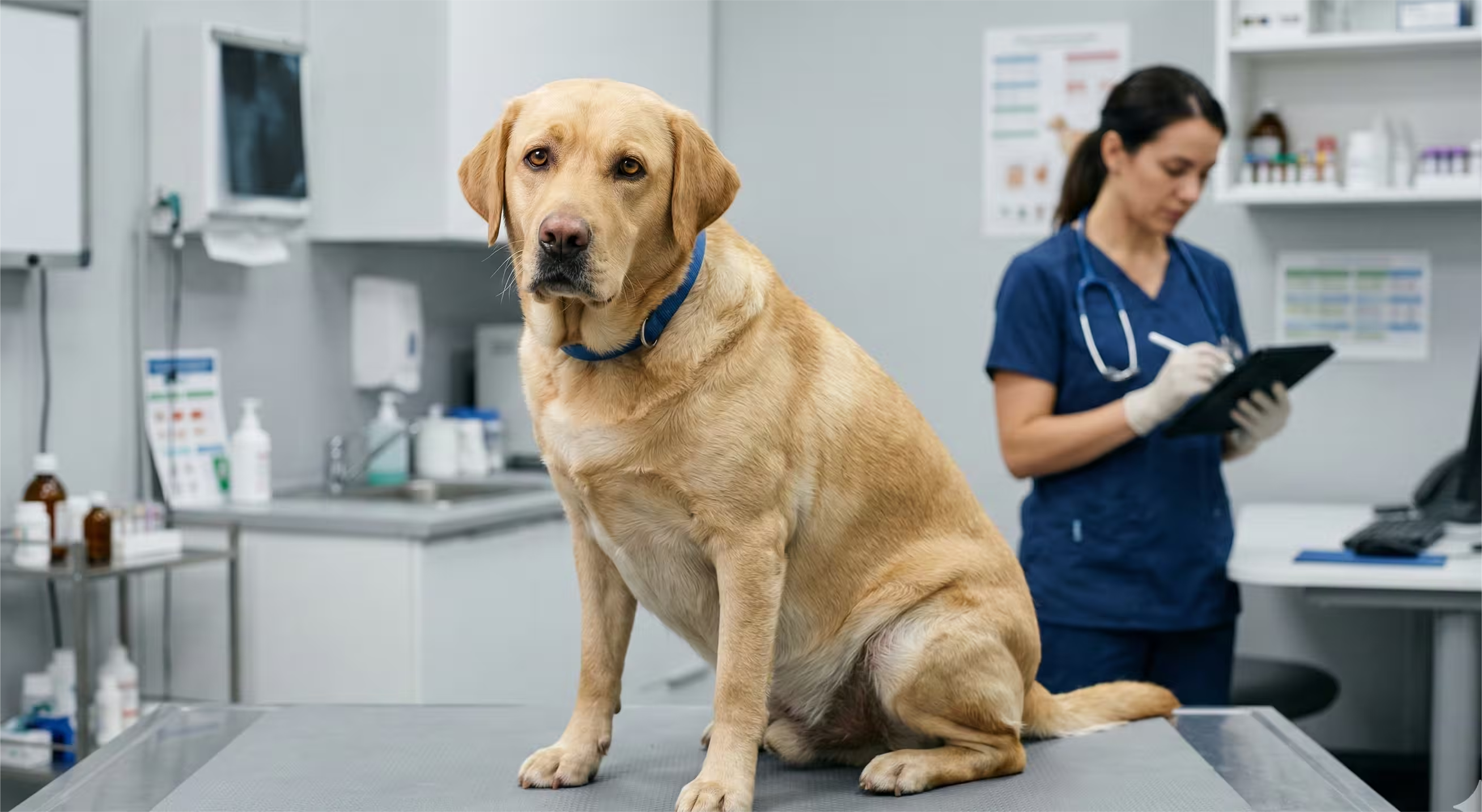
And every week, pet owners watching their overweight dog waddle to the food bowl ask the same question: "Can I give my dog Ozempic?"
It's a fair question. Over 56% of dogs in the United States are overweight or obese, according to the Association for Pet Obesity Prevention. Canine obesity shortens lifespans by an average of 2.5 years and drives arthritis, diabetes, heart disease, and certain cancers. If a drug exists that helped you lose weight, why can't it help your dog?
Here's the complete, veterinarian-reviewed answer — including what GLP-1 drugs actually do, the one FDA-approved weight loss drug for dogs that already exists, what's coming in 2026 and beyond, and the proven strategies that work right now without any medication at all.
The Short Answer: No, Dogs Should Not Take Ozempic
Ozempic (semaglutide) is not approved for use in dogs. It is a human prescription medication manufactured by Novo Nordisk and approved by the FDA exclusively for type 2 diabetes management and chronic weight management in adult humans.
Giving your dog Ozempic, Wegovy, Mounjaro, or any other human GLP-1 receptor agonist is:
- Not FDA-approved for any animal species
- Not studied for canine safety at clinically relevant doses
- Potentially dangerous — dogs metabolize drugs differently than humans, and the side effects in canines are not well understood
- Illegal for a veterinarian to prescribe off-label without significant clinical justification
Bottom line: Even if your vet wanted to try it, there is no established dosing protocol, no safety data, and no regulatory pathway for semaglutide in dogs. Do not give your dog any human GLP-1 medication.
What Are GLP-1 Drugs and Why Don't They Work the Same Way in Dogs?
GLP-1 (glucagon-like peptide-1) receptor agonists work by mimicking a natural gut hormone that:
- Signals the brain to reduce appetite (you feel full sooner)
- Slows gastric emptying (food stays in the stomach longer)
- Increases insulin secretion (improves blood sugar regulation)
- Reduces glucagon release (prevents blood sugar spikes)
In humans, this combination leads to significant weight loss — typically 10–20% of body weight over 12–18 months.
Why Dogs Are Different
| Factor | Humans | Dogs |
|---|---|---|
| GLP-1 receptor distribution | Well-mapped; concentrated in brain, pancreas, GI tract | Different distribution; less research on brain-level effects |
| Metabolism of semaglutide | Half-life ~7 days; well-studied pharmacokinetics | Unknown half-life; no published canine PK data |
| Primary obesity cause | Behavioral, hormonal, genetic, environmental | Almost exclusively overfeeding + insufficient exercise |
| Response to appetite suppression | Complex — emotional eating, food reward, habitual eating | Simpler — reduce food, weight drops predictably |
| Side effects in clinical use | Nausea, vomiting, pancreatitis risk (known and manageable) | Unknown severity; vomiting could cause dehydration, pancreatitis risk is especially dangerous in dogs |
The core issue is that canine obesity is almost always a math problem, not a hormonal one. Dogs don't stress-eat. They don't binge-watch Netflix with a bag of treats. They eat exactly what their owners put in front of them. The solution, in nearly every case, is recalculating calories — not adding medication.
The One FDA-Approved Weight Loss Drug for Dogs: Dirlotapide (Slentrol)
What most pet owners don't know is that an FDA-approved weight loss drug for dogs already exists. It's been available since 2007.
Dirlotapide (brand name: Slentrol) is a selective microsomal triglyceride transfer protein (MTP) inhibitor. It works through a completely different mechanism than GLP-1 drugs:
| Feature | Details |
|---|---|
| Brand name | Slentrol |
| FDA approval | January 2007 |
| How it works | Blocks fat absorption in the gut + reduces appetite via gut hormone signaling |
| Form | Oral liquid solution |
| Typical use | Used alongside a reduced-calorie diet and exercise program |
| Treatment duration | Usually 4–12 months, with gradual dose adjustments |
| Side effects | Vomiting, diarrhea, lethargy, drooling (common but usually mild) |
| Prescription required | Yes — veterinarian prescription only |
How Much Does Dirlotapide Cost?
Dirlotapide pricing varies, but typical costs range from $30–$80 per month depending on dog size and dosage. It is not widely stocked at general pharmacies — your vet may need to order it from a veterinary supplier or compounding pharmacy.
Why Isn't Dirlotapide More Popular?
Despite being FDA-approved for over 15 years, Slentrol never gained widespread adoption because:
- Dogs regain weight after stopping — the drug addresses appetite, not the underlying feeding behavior
- Side effects — vomiting and diarrhea are common enough to discourage owners
- It's not a standalone solution — still requires diet changes and exercise
- Calorie management alone works — most vets find that simply adjusting food portions achieves the same results without medication side effects
Vet perspective: "In my 18 years of practice, I've prescribed dirlotapide fewer than a dozen times. For 95% of overweight dogs, the problem is that the owner feeds too much and exercises too little. We don't need a drug for that — we need a calorie calculator and a measuring cup." — Dr. Sarah Mitchell, DVM
What's Coming in 2026: GLP-1 Drugs for Pets
The pet pharmaceutical industry is paying close attention to the GLP-1 revolution. Here's what's actually in development:
Okava Pharmaceuticals — GLP-1 Implant for Cats (Clinical Trials)
- Product: Long-acting GLP-1 receptor agonist delivered via subcutaneous implant
- Status: MEOW-1 clinical trial launched in late 2025
- Target species: Cats first, dogs to follow
- Expected results: Mid-2026
- Timeline to market: If trials succeed, FDA approval could come within 2 years
Other Research
- Multiple academic studies are investigating GLP-1 receptor agonists in canine models, but none have reached commercial development
- Tirzepatide (Mounjaro/Zepbound) and other dual-agonist compounds are being studied in animal models, primarily for diabetes rather than obesity
- No veterinary pharmaceutical company has announced a dog-specific GLP-1 product with a firm regulatory timeline
Should You Wait for a GLP-1 Drug for Dogs?
No. Even in the most optimistic scenario, a GLP-1 drug approved for dogs is likely 3–5+ years away. Your dog's weight problem is happening right now, and every month of excess weight increases the risk of joint disease, diabetes, and shortened lifespan.
The proven methods available today — calorie management, portion control, and exercise — are effective, free, and can start working this week.
What Actually Works: Proven Dog Weight Loss Without Medication
Here's what veterinary nutritionists recommend — and it works for 95%+ of overweight dogs without any medication.
Step 1: Know Your Dog's Exact Calorie Needs
Every dog has a specific daily calorie requirement based on their weight, breed, age, activity level, and spay/neuter status. Feeding above this number causes weight gain. Feeding below it causes weight loss. It really is that straightforward.
The veterinary formula:
RER (kcal/day) = 70 × (body weight in kg) ^ 0.75
Then multiply by a life stage factor:
| Life Stage | Multiplier |
|---|---|
| Neutered adult (normal weight) | 1.6 × RER |
| Intact adult | 1.8 × RER |
| Overweight / weight loss | 1.0 × RER (for ideal weight) |
| Senior dog (7+ years) | 1.2–1.4 × RER |
| Active / working dog | 2.0–5.0 × RER |
| Puppy (4–12 months) | 2.0 × RER |
Example: A neutered Golden Retriever weighing 80 lbs (36.3 kg):
- RER = 70 × (36.3)^0.75 = 70 × 14.7 = 1,029 kcal
- Maintenance = 1,029 × 1.6 = 1,646 kcal/day
- Weight loss = 1,029 × 1.0 = 1,029 kcal/day
Skip the math. Our free dog calorie calculator does this instantly — select your breed, enter the weight, choose the goal, and get a precise calorie target in seconds. Over 188 breeds supported.
Step 2: Measure Everything (Yes, Actually Measure)
The #1 reason dogs are overweight: eyeballing portions. Studies show that owners who use measuring cups overportion by an average of 48%. Owners who pour freely overportion by up to 80%.
- Use a digital kitchen scale (weigh food in grams)
- Follow the food manufacturer's kcal/cup listing, but verify with the scale
- Count treats as part of the daily total — not as "extras"
- If multiple family members feed the dog, post the daily plan on the fridge
Step 3: Apply the 90/10 Treat Rule
No more than 10% of daily calories should come from treats. For a dog eating 1,000 kcal/day, that's a treat budget of 100 calories.
| Common Treat | Approximate Calories |
|---|---|
| 1 medium Milk-Bone biscuit | 40 kcal |
| 1 Greenies dental chew (regular) | 90 kcal |
| 1 tablespoon peanut butter | 95 kcal |
| 1 baby carrot | 4 kcal |
| 1 blueberry | 1 kcal |
| 1 small apple slice | 5 kcal |
| 1 commercial jerky strip | 30–50 kcal |
| 1 pig ear | 200+ kcal |
Notice something? A single pig ear can blow an entire day's treat budget. And one tablespoon of peanut butter nearly does the same. Most owners have no idea how calorie-dense dog treats are.
Step 4: Increase Exercise Gradually
| Dog Size | Minimum Daily Exercise | Weight Loss Target |
|---|---|---|
| Small (under 20 lbs) | 20–30 min walks | 30–45 min walks + play |
| Medium (20–50 lbs) | 30–45 min walks | 45–60 min walks + play |
| Large (50–90 lbs) | 45–60 min walks | 60–90 min walks + active play |
| Giant (90+ lbs) | 30–45 min walks (joint protection) | 45–60 min moderate walks |
Important for overweight dogs: Increase exercise gradually over 2–4 weeks. An obese dog jumping straight into intense exercise risks joint injuries, heatstroke, and exercise intolerance. Low-impact activities like swimming are ideal if available.
Step 5: Track Progress Safely
- Weigh your dog every 1–2 weeks (same scale, same time of day)
- Safe weight loss rate: 1–2% of body weight per week — for a 70-lb dog, that's 0.7–1.4 lbs per week
- If weight loss stalls for 2+ weeks, reduce calories by 10% or increase exercise
- If your dog is losing more than 3% per week, increase food — rapid weight loss can stress the liver and kidneys
Dog Weight Loss Calorie Chart (Quick Reference)
Here's the chart every dog owner searching "how many calories should my dog eat to lose weight" needs — daily calorie targets for weight loss based on ideal body weight:
| Ideal Weight (lbs) | Ideal Weight (kg) | RER (kcal) | Weight Loss Target (1.0 × RER) | Maintenance (1.6 × RER) |
|---|---|---|---|---|
| 10 | 4.5 | 211 | 211 | 338 |
| 20 | 9.1 | 370 | 370 | 592 |
| 30 | 13.6 | 505 | 505 | 808 |
| 40 | 18.1 | 627 | 627 | 1,003 |
| 50 | 22.7 | 740 | 740 | 1,184 |
| 60 | 27.2 | 846 | 846 | 1,354 |
| 70 | 31.8 | 946 | 946 | 1,514 |
| 80 | 36.3 | 1,042 | 1,042 | 1,667 |
| 90 | 40.8 | 1,133 | 1,133 | 1,813 |
| 100 | 45.4 | 1,221 | 1,221 | 1,954 |
Want breed-specific numbers? Our dog calorie calculator covers 188 dog breeds with customized calorie recommendations based on your dog's exact profile.
Frequently Asked Questions
Can dogs take Ozempic?
No. Ozempic (semaglutide) is a human prescription medication that is not FDA-approved, tested, or considered safe for use in dogs. There are no established dosing guidelines for canines, and the side effects in dogs are unknown. Never give your dog any human GLP-1 medication without explicit veterinary direction.
Can dogs take Wegovy for weight loss?
No. Wegovy is the same active ingredient as Ozempic (semaglutide) at higher doses, approved only for human weight management. It is not safe or appropriate for dogs. Dogs metabolize medications differently than humans, and the risks of administering Wegovy to a dog include potentially severe gastrointestinal complications, pancreatitis, and unknown long-term effects.
Is there an Ozempic for dogs?
Not yet. The only FDA-approved weight loss drug for dogs is dirlotapide (Slentrol), which works through a completely different mechanism (blocking fat absorption rather than mimicking GLP-1). Several pharmaceutical companies are researching GLP-1 agonists for pets, with the earliest potential FDA approval estimated around 2028 or later.
What is the weight loss drug for dogs?
Dirlotapide (Slentrol) is the only FDA-approved prescription medication specifically for canine weight management. Approved in 2007, it works by reducing appetite and blocking dietary fat absorption. It must be prescribed by a veterinarian and used alongside a calorie-controlled diet and exercise program. However, most veterinarians recommend calorie management first, as it's equally effective without medication side effects.
Can dogs take GLP-1 drugs?
No GLP-1 receptor agonist is currently approved for veterinary use in any species. Research is ongoing — Okava Pharmaceuticals is conducting clinical trials for a GLP-1 implant in cats (MEOW-1 trial), with dog formulations planned for future development. Until these drugs complete regulatory trials and receive FDA approval, they should not be used in pets.
Does semaglutide work on dogs?
There is no published clinical evidence supporting the safety or efficacy of semaglutide in dogs. While dogs do have GLP-1 receptors, the pharmacokinetics (how the drug is absorbed, distributed, and eliminated) and side effect profile in canines are not established. Experimental use of human semaglutide in dogs is not recommended.
How many calories should my dog eat to lose weight?
Most veterinary nutritionists recommend feeding at 1.0 × RER calculated for the dog's ideal body weight for safe weight loss. For example, a dog whose ideal weight is 50 lbs should eat approximately 740 kcal/day for weight loss. The safe rate is 1–2% of body weight per week. Use our dog calorie calculator for a personalized target.
How much does dirlotapide cost?
Dirlotapide (Slentrol) typically costs $30–$80 per month, depending on the dog's size and required dosage. It requires a veterinary prescription and may not be stocked at regular pharmacies. Some veterinary compounding pharmacies can prepare it at lower cost. Ask your veterinarian about availability and pricing in your area.
What about Wegovy or Ozempic for cats?
Wegovy and Ozempic are not approved for cats either. However, Okava Pharmaceuticals has launched the MEOW-1 clinical trial investigating a GLP-1-based implant specifically designed for feline obesity. Results are expected by mid-2026. If successful, this could become the first GLP-1 therapy approved for any pet species.
The Fastest Path to a Healthier Dog
The Ozempic conversation for dogs is exciting — and someday, safe, effective GLP-1 medications for pets may become a reality. But that day isn't today.
What is available today, right now, for free:
- Calculate your dog's exact daily calorie needs — takes 30 seconds
- Switch to a measured feeding routine — kitchen scale, not a scoop
- Apply the 90/10 treat rule — most owners are shocked at how many hidden calories treats add
- Exercise consistently — even 15 minutes more per day makes a measurable difference
- Weigh biweekly — track progress and adjust
Your dog can't Google weight loss tips. That's your job. And the best drug-free tool available is knowing exactly how many calories they need — not one more, not one less.
Try our free calorie calculator now →
Reviewed by Dr. Sarah Mitchell, DVM — 18 years of clinical experience in canine internal medicine and nutrition.
Sources and References
- Association for Pet Obesity Prevention (APOP) — 2024 National Pet Obesity Survey
- U.S. Food & Drug Administration — Slentrol (dirlotapide) Approval Letter, January 2007
- Salt, C., et al. — "Association between life span and body condition in neutered client-owned dogs" (Journal of Veterinary Internal Medicine, 2019)
- Okava Pharmaceuticals — MEOW-1 Clinical Trial Announcement, 2025
- National Research Council — "Nutrient Requirements of Dogs and Cats" (2006)
- German, A.J. — "The growing problem of obesity in dogs and cats" (The Journal of Nutrition, 2006)
- WSAVA Global Nutrition Committee — Guidelines on Selecting Pet Foods (2024)